Labs
Experiments from school physics, ready to run on the virtual bench of Experimenters. Every lab opens right on its page with the circuit already assembled; below it are the aim, the procedure, the expected result and questions. Change anything you like: Start over in the lab menu brings the bench back, Open the full lab opens it in a separate tab.
Primary school
-
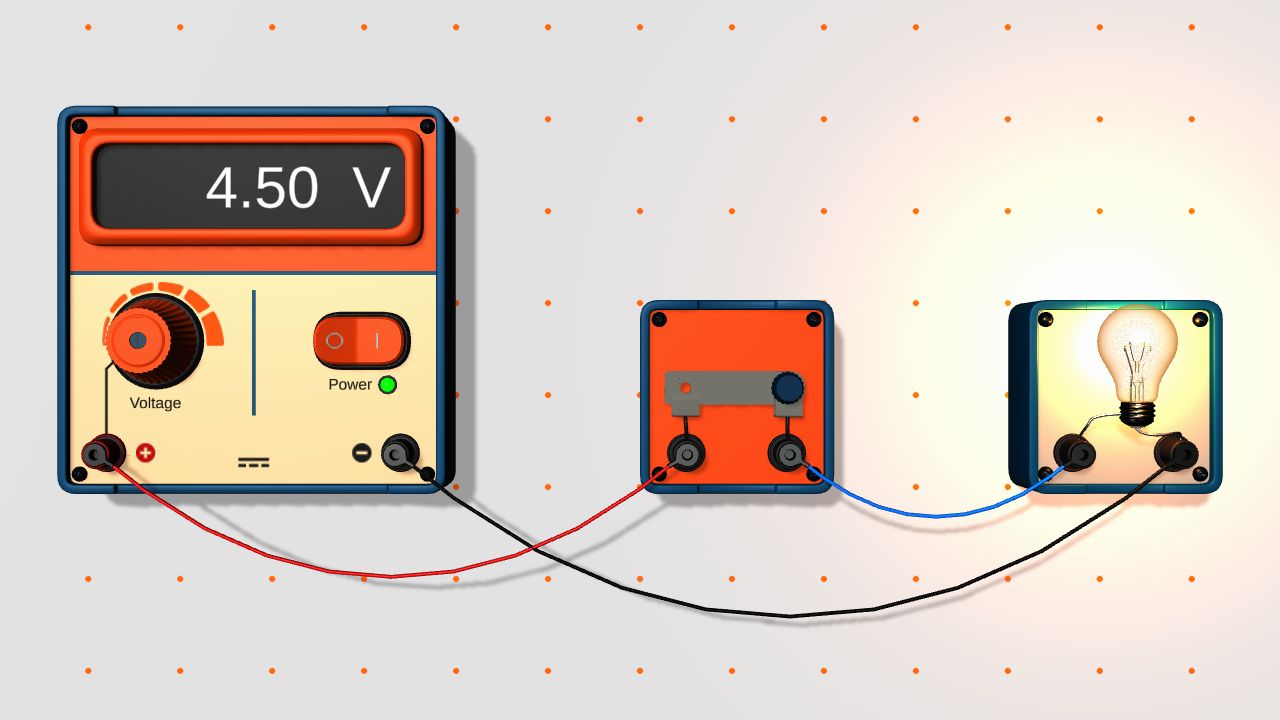
Make sure that current flows and the lamp lights only in a closed circuit.
-
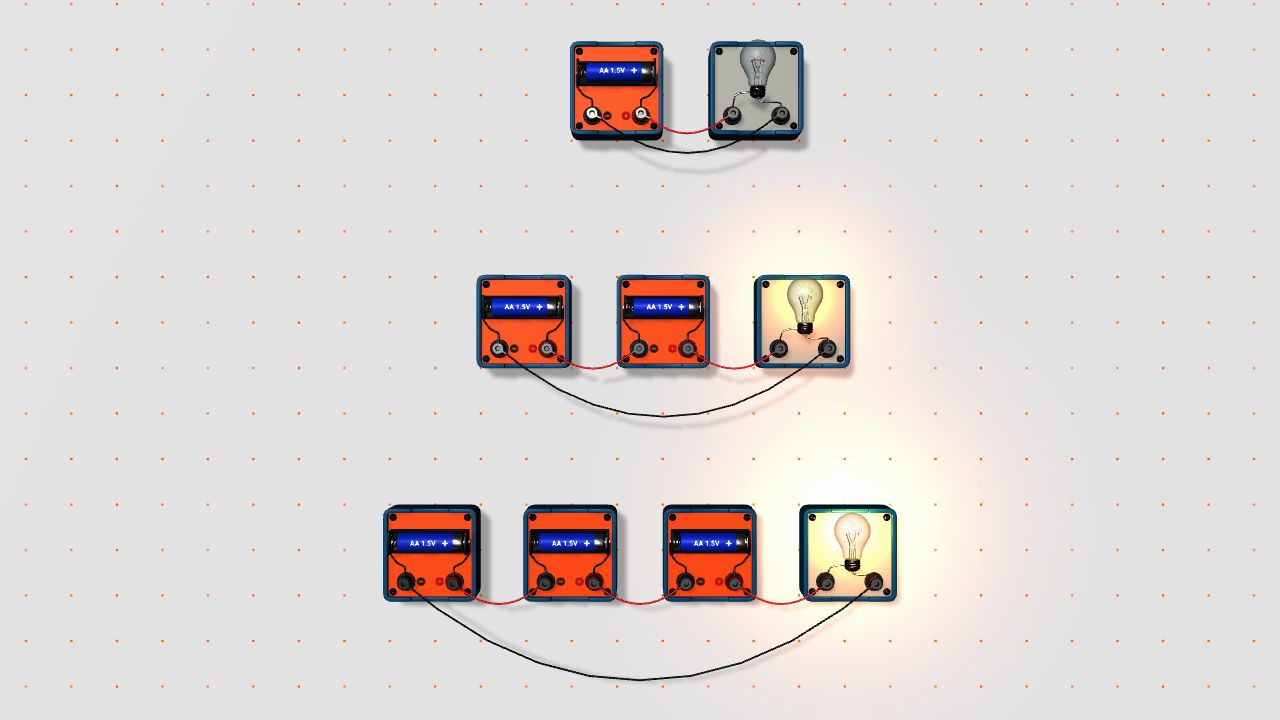
Brightness and the number of batteries
Find out how the brightness of a lamp depends on the voltage, that is, on the number of batteries connected in series.
-
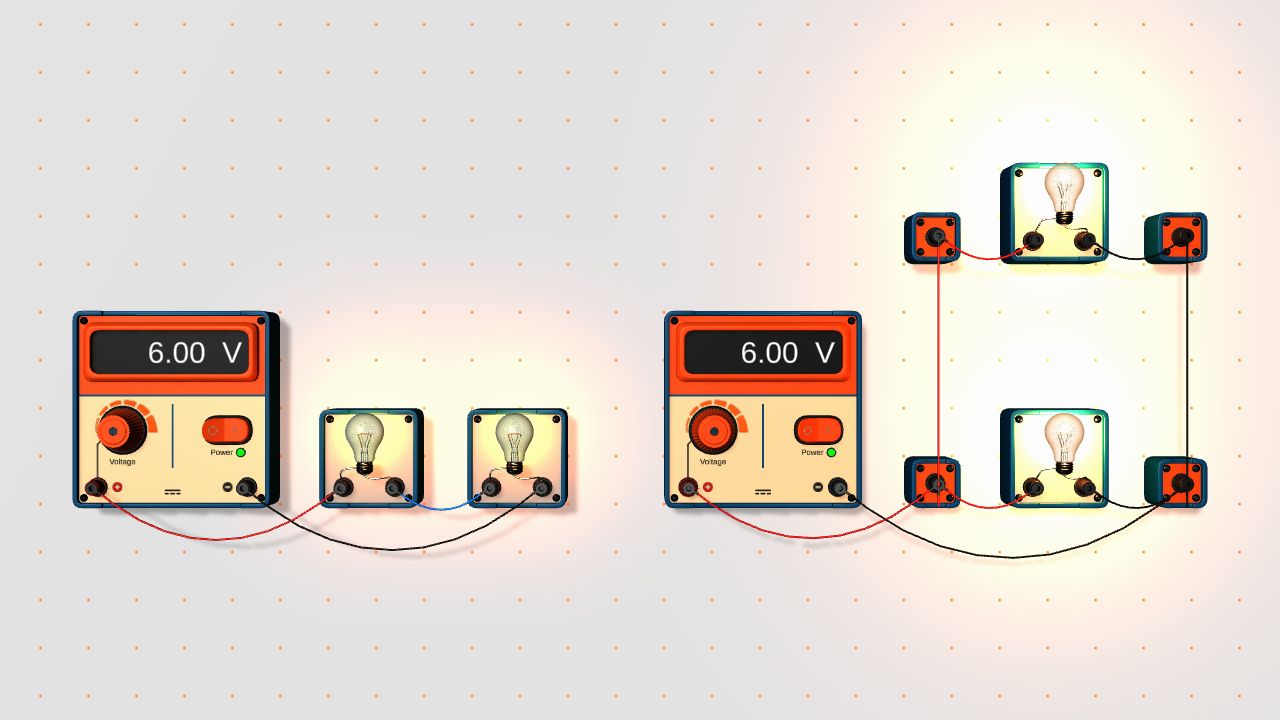
Two lamps in series and in parallel
Compare series and parallel connection of lamps.
-
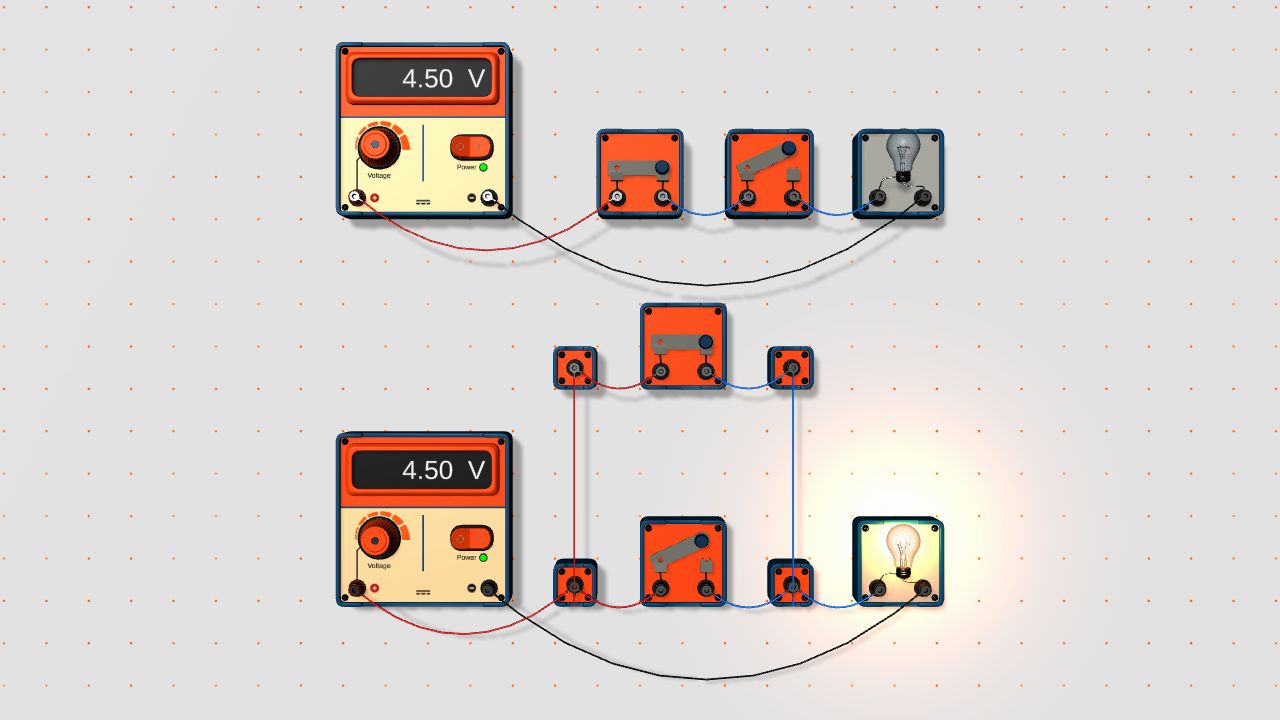
Make a table showing when the lamp is lit for two switches connected in series and in parallel.
Middle school
-
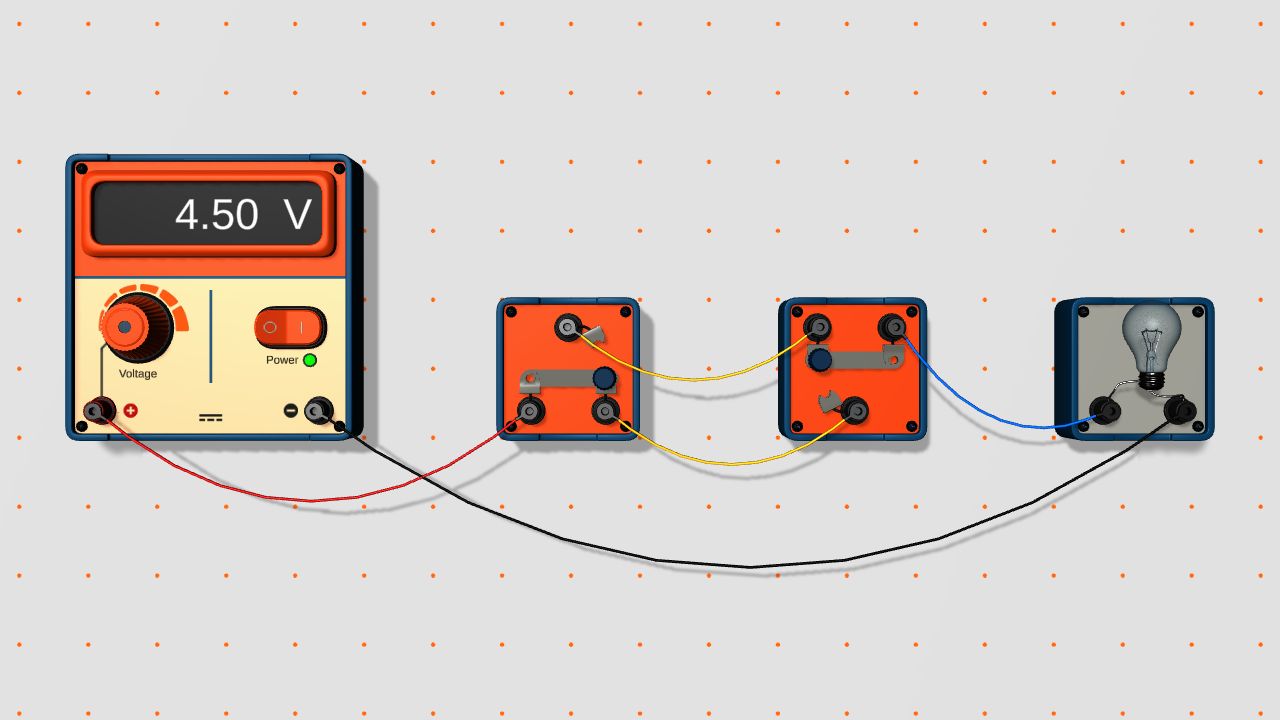
Understand how a circuit works in which one lamp can be switched on and off from two places, like the light on a staircase or in a long corridor.
-
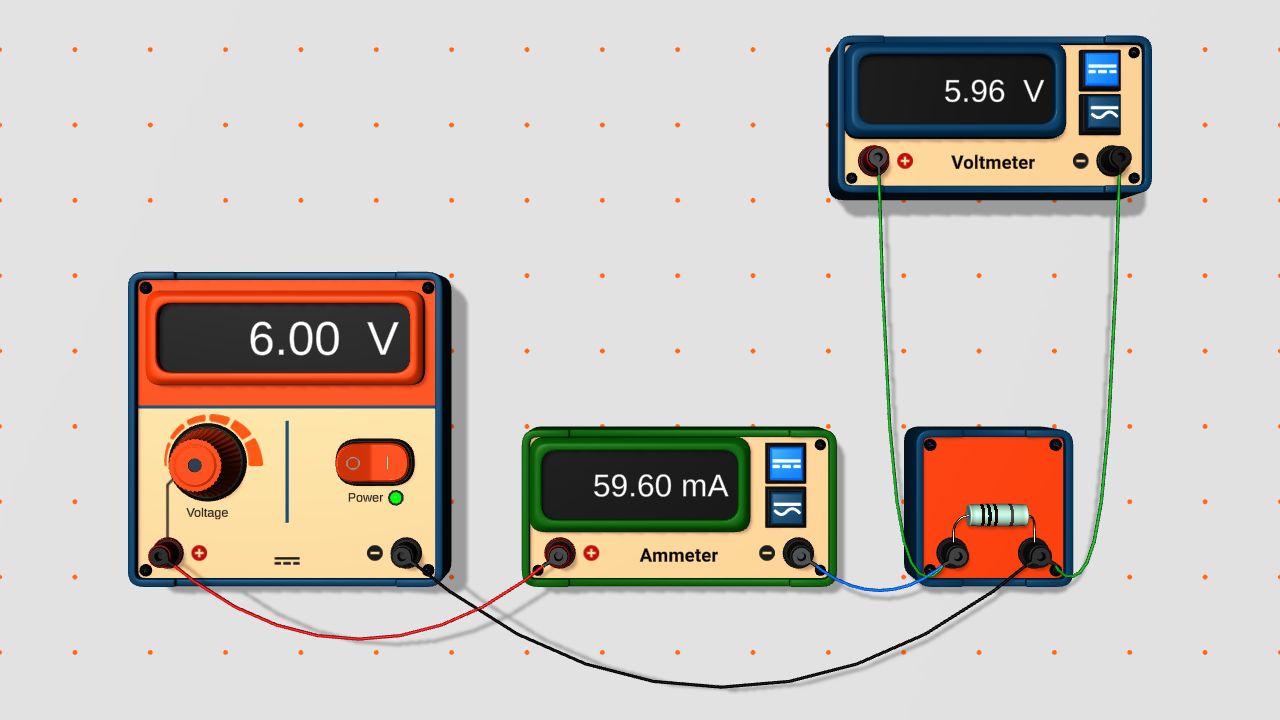
Connecting an ammeter and a voltmeter
Learn to connect an ammeter in series and a voltmeter in parallel with a section of the circuit.
-
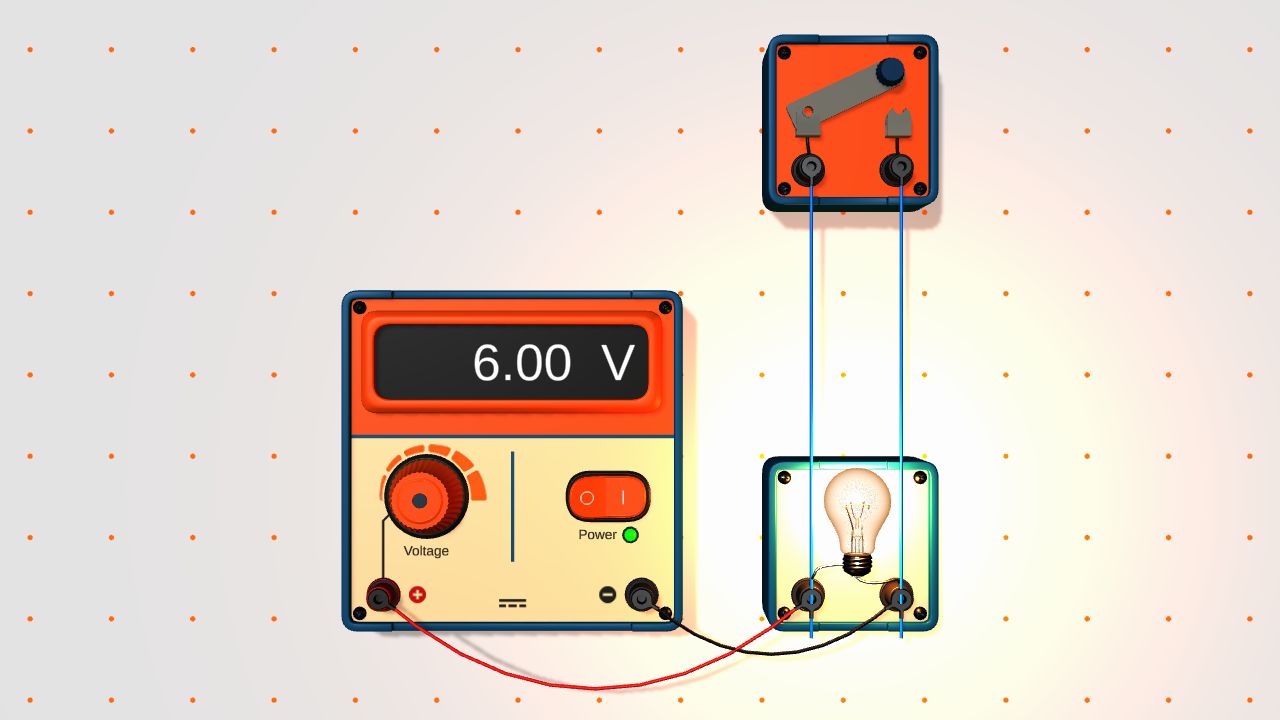
See what happens in a short circuit and how the protection works.
-
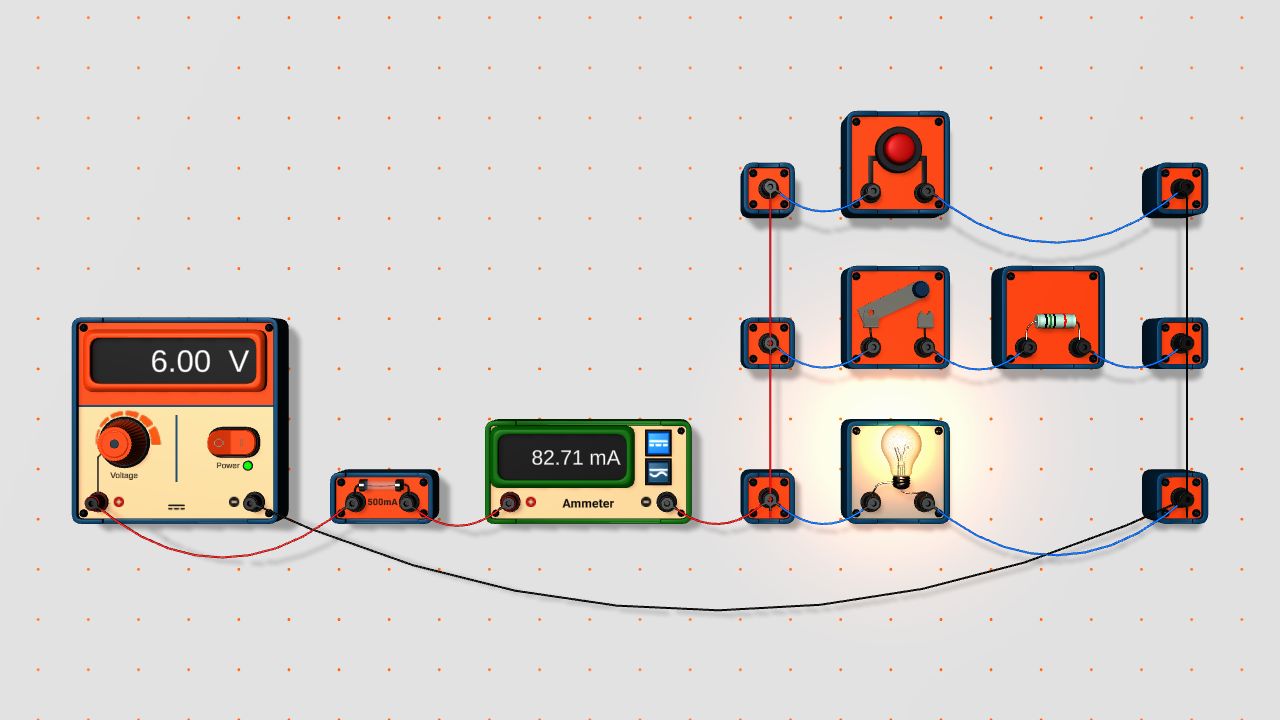
See how a fuse protects a circuit from overload and from a short circuit, and why its rating is matched to the load.
-
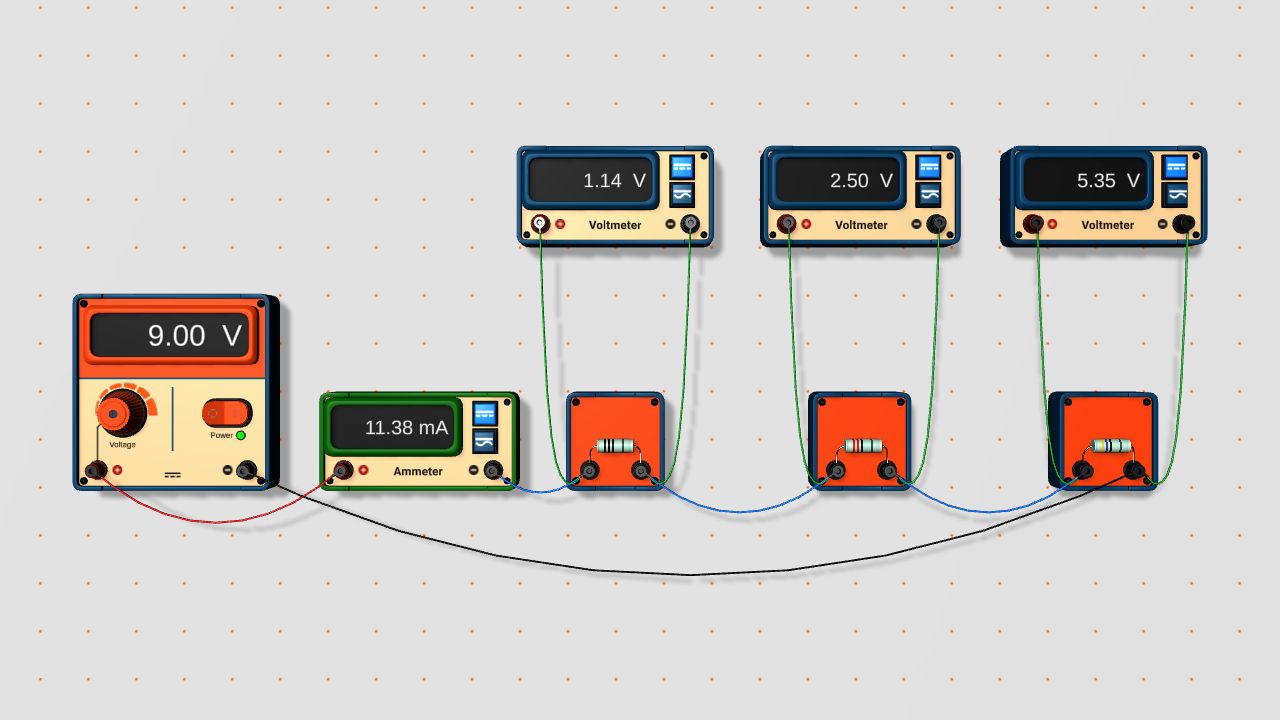
Check that in a series circuit the current is the same everywhere, and that the voltages across the parts and the resistances add up.
-
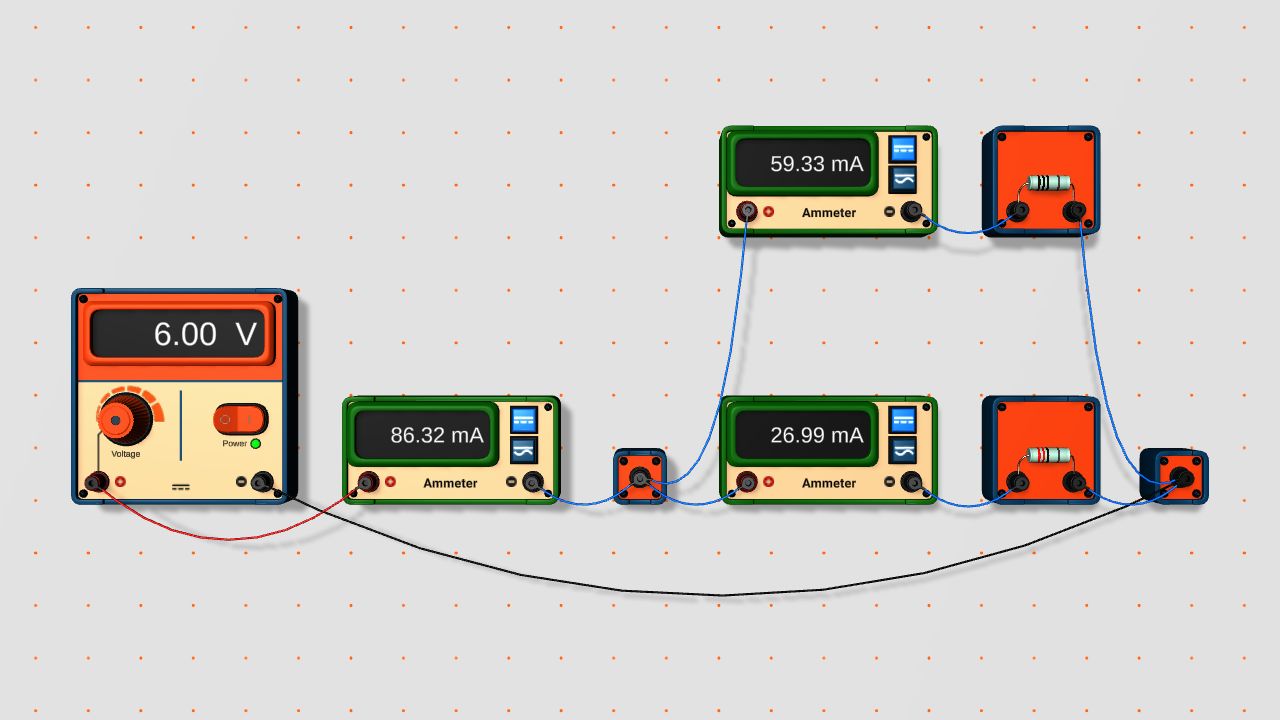
Check that the total current equals the sum of the currents in the branches, and find the total resistance of the branches.
-
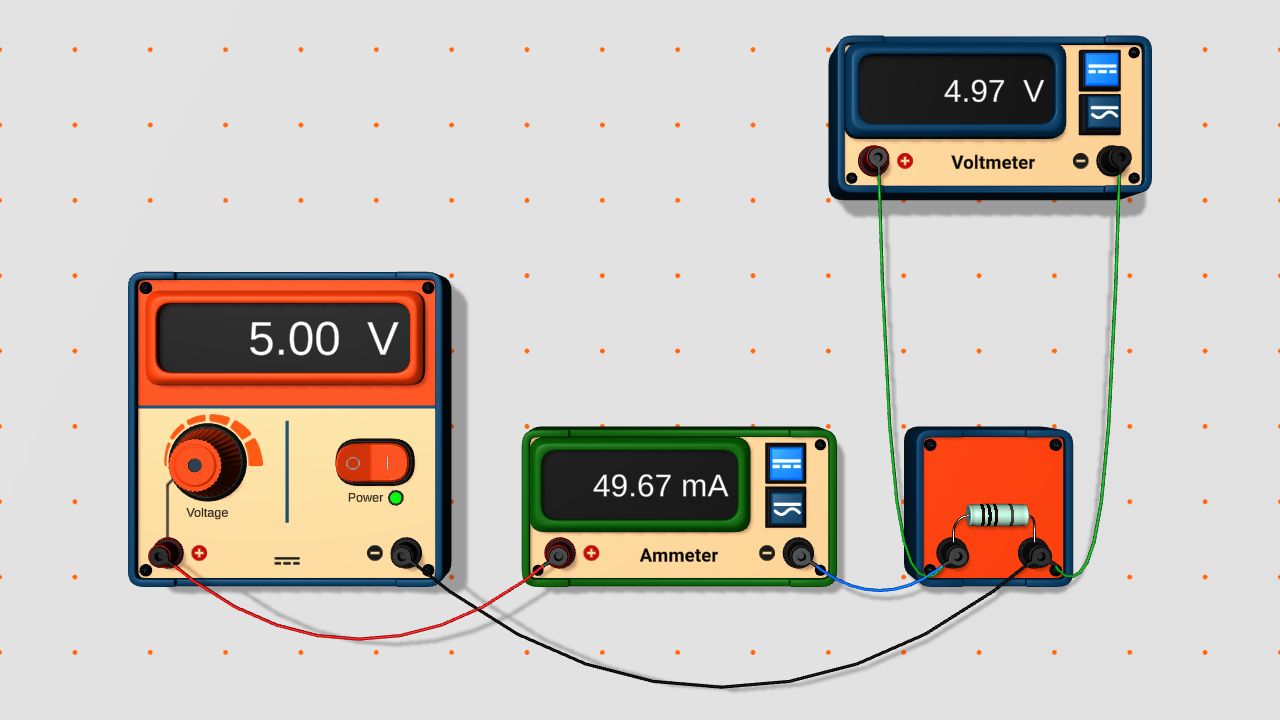
Establish the relationship between the current through a resistor and the voltage across it.
-
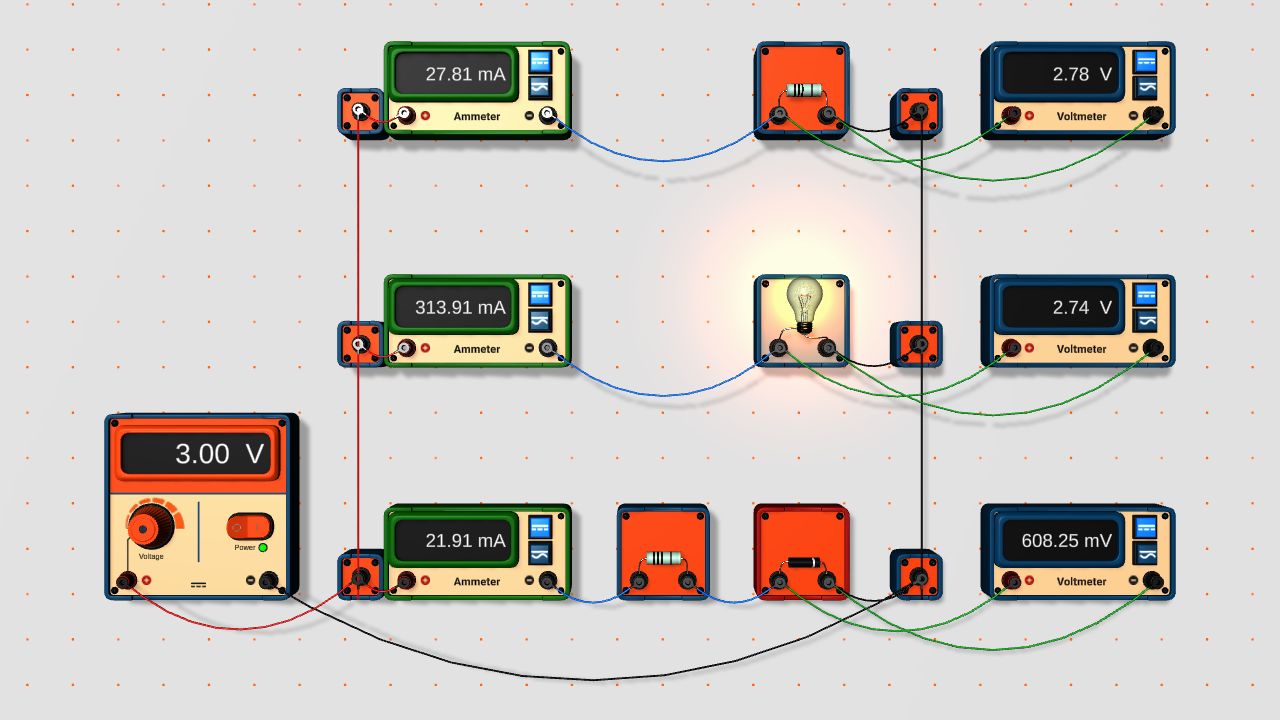
Measure the current–voltage characteristics of a resistor, a filament lamp and a diode, and compare their shapes.
-
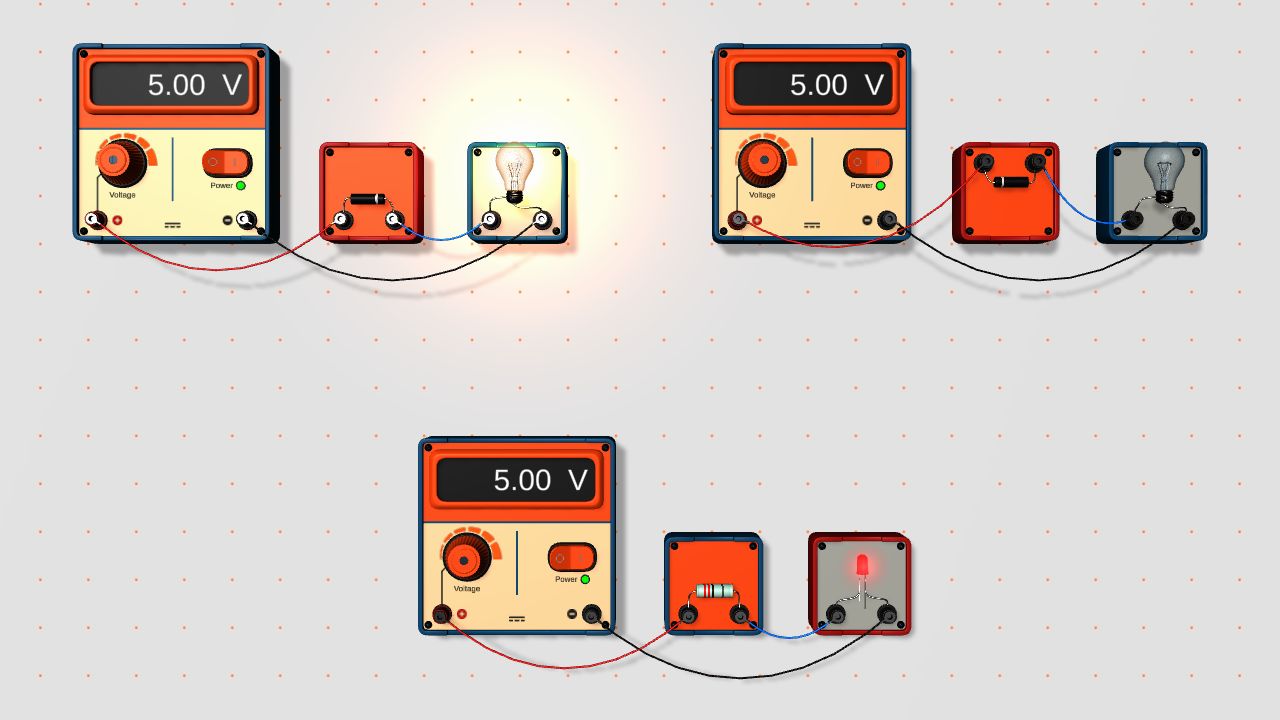
Confirm that a diode passes current in one direction only, and connect an LED with a current-limiting resistor.
-
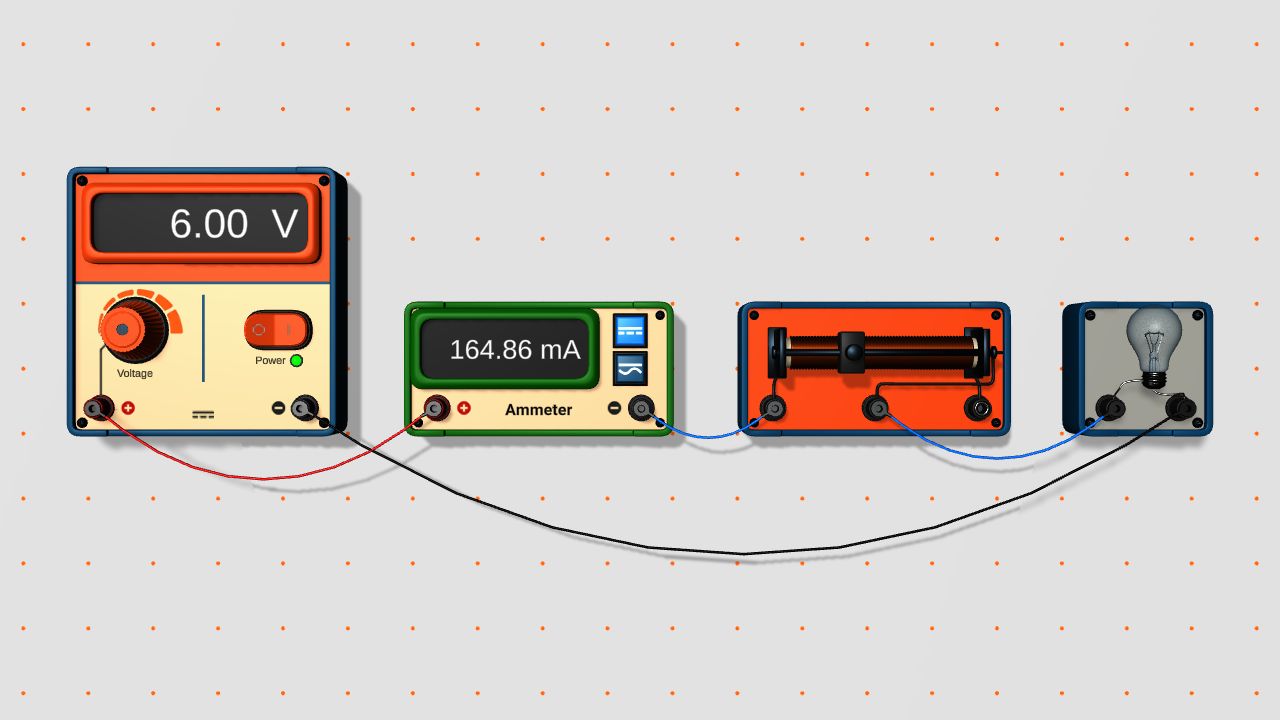
Rheostat as a brightness control
Smoothly control the current and the brightness of a lamp with a rheostat.
-
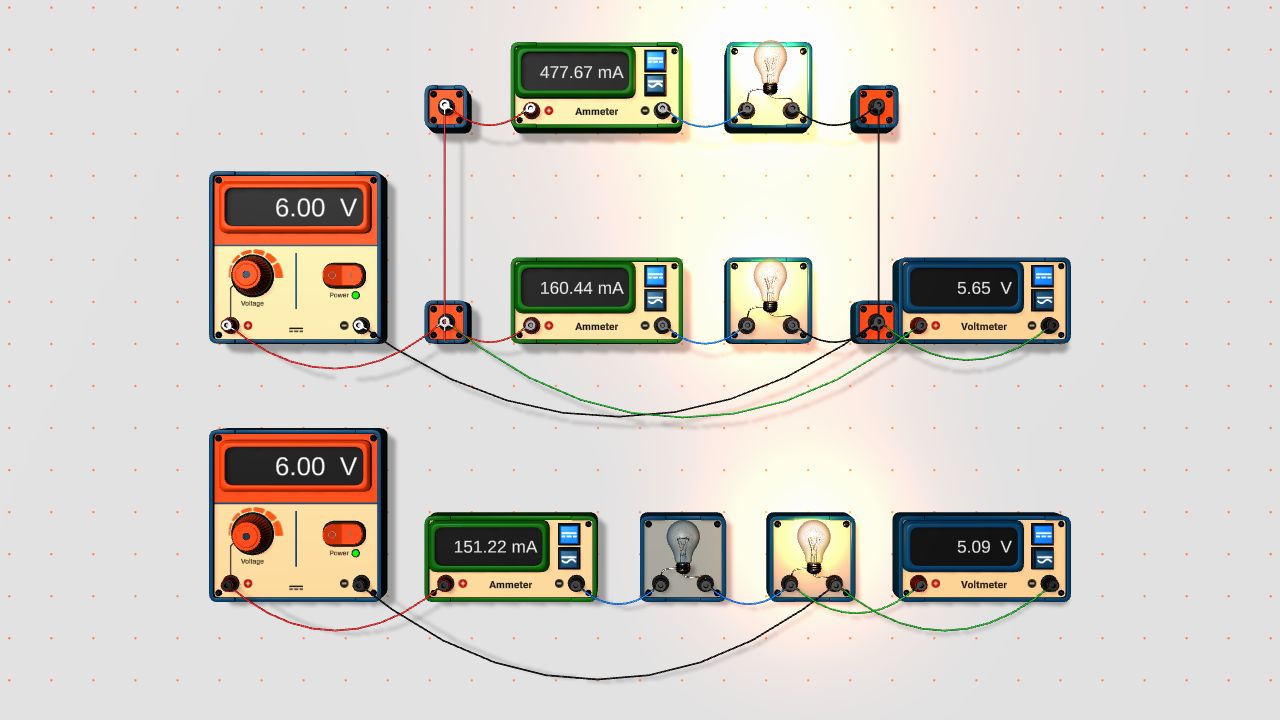
Determine the power of the lamps, \(P = U \cdot I\), and compare their brightness when they are connected in parallel and in series.
-
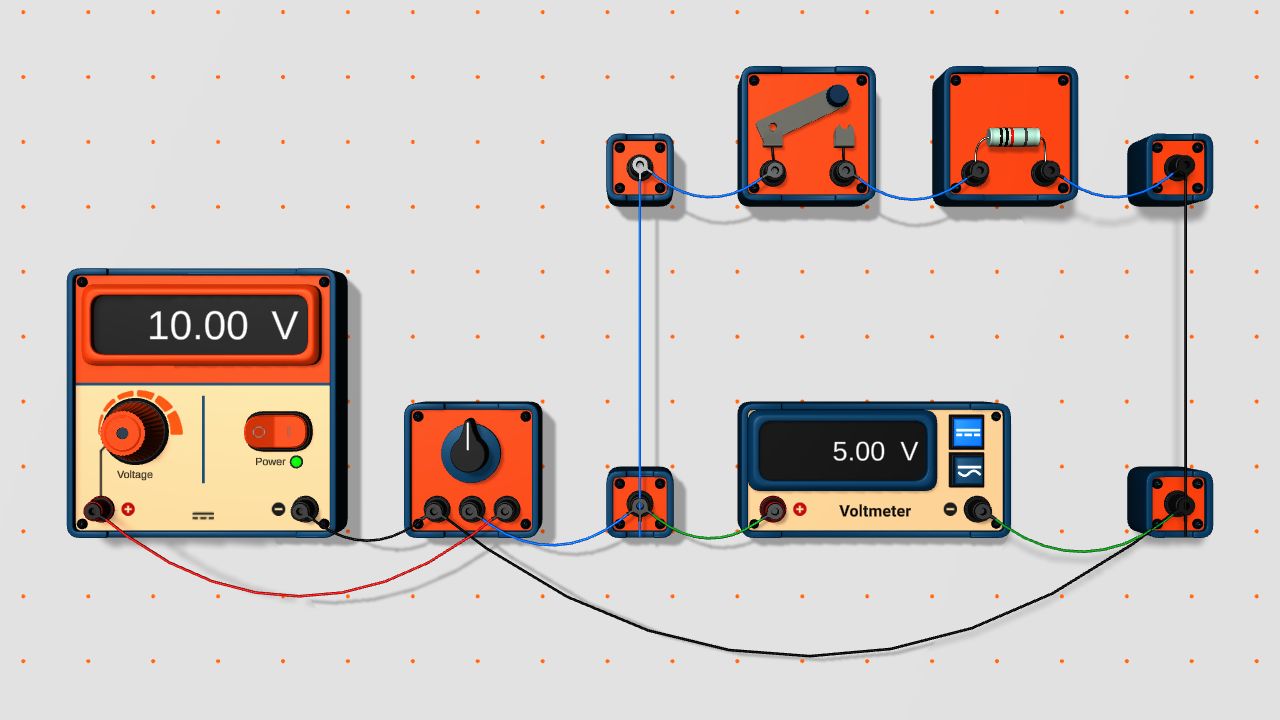
Potential divider with a potentiometer
Obtain an adjustable voltage from a potentiometer and see how a load changes the output of the divider.
-
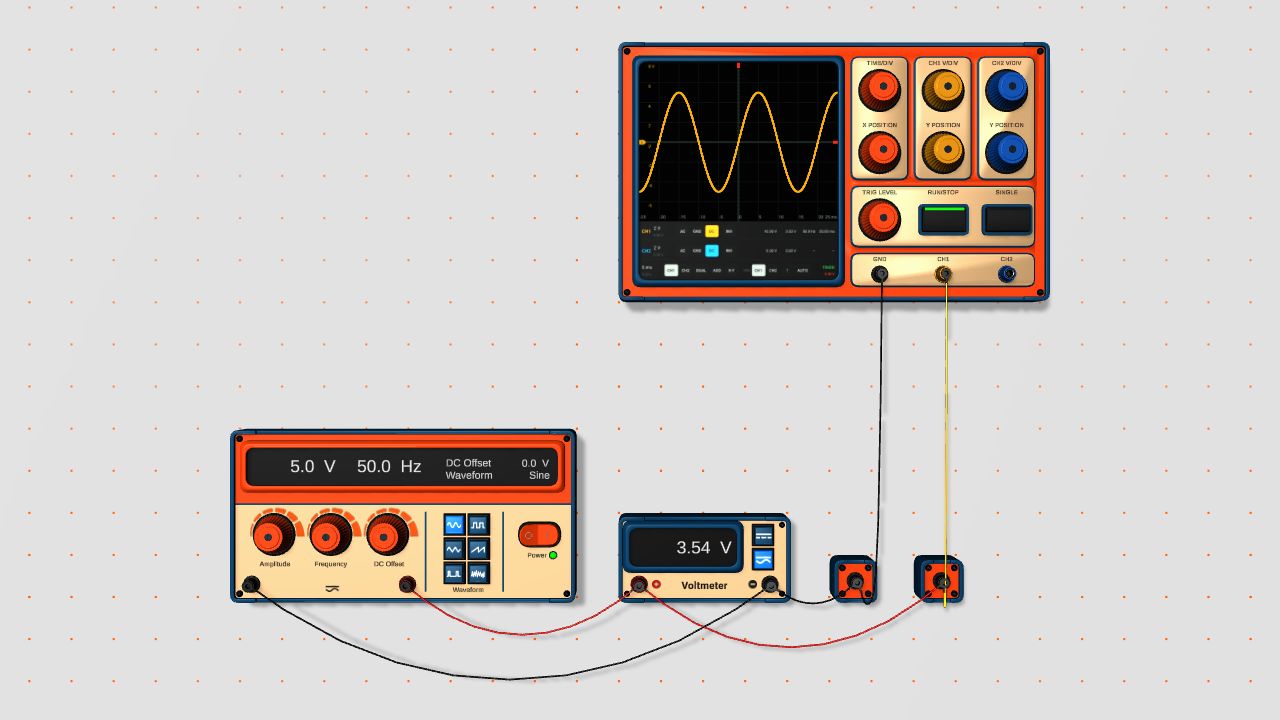
AC voltage on the oscilloscope
Measure the period, frequency, amplitude and RMS value of an alternating voltage.
High school
-
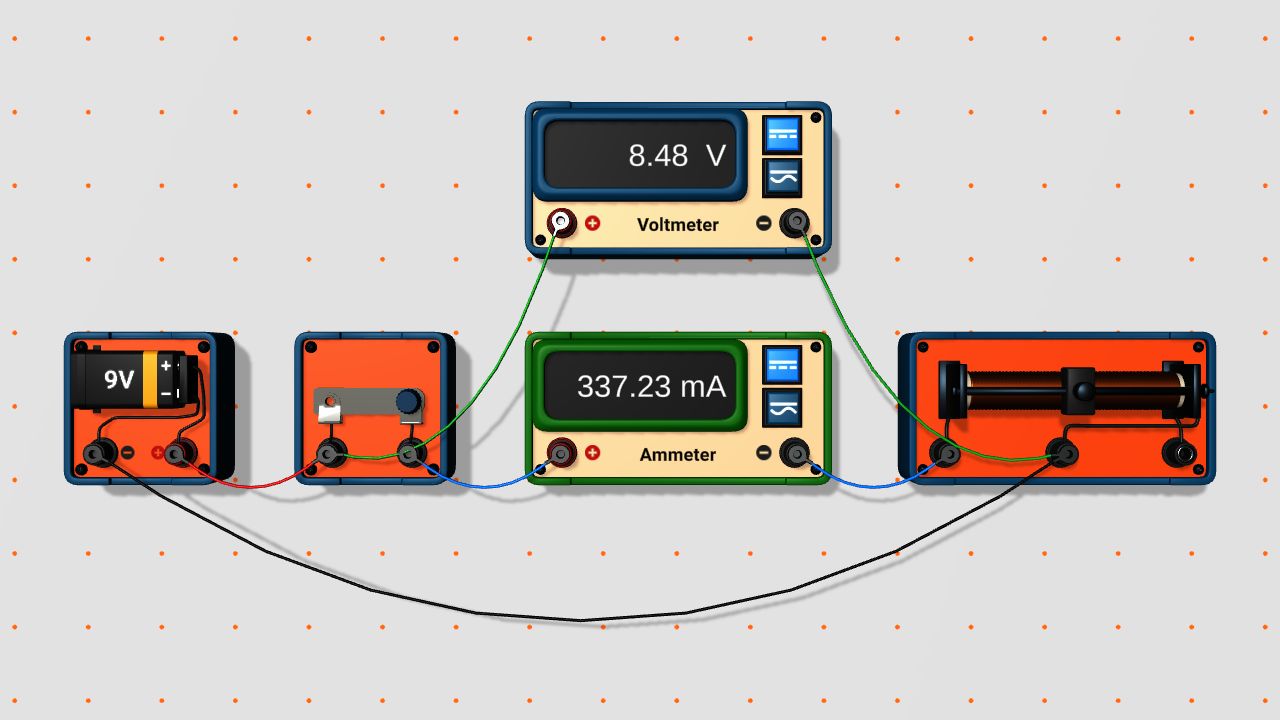
Determine the EMF and internal resistance of a battery from how the voltage across the external circuit depends on the current.
-
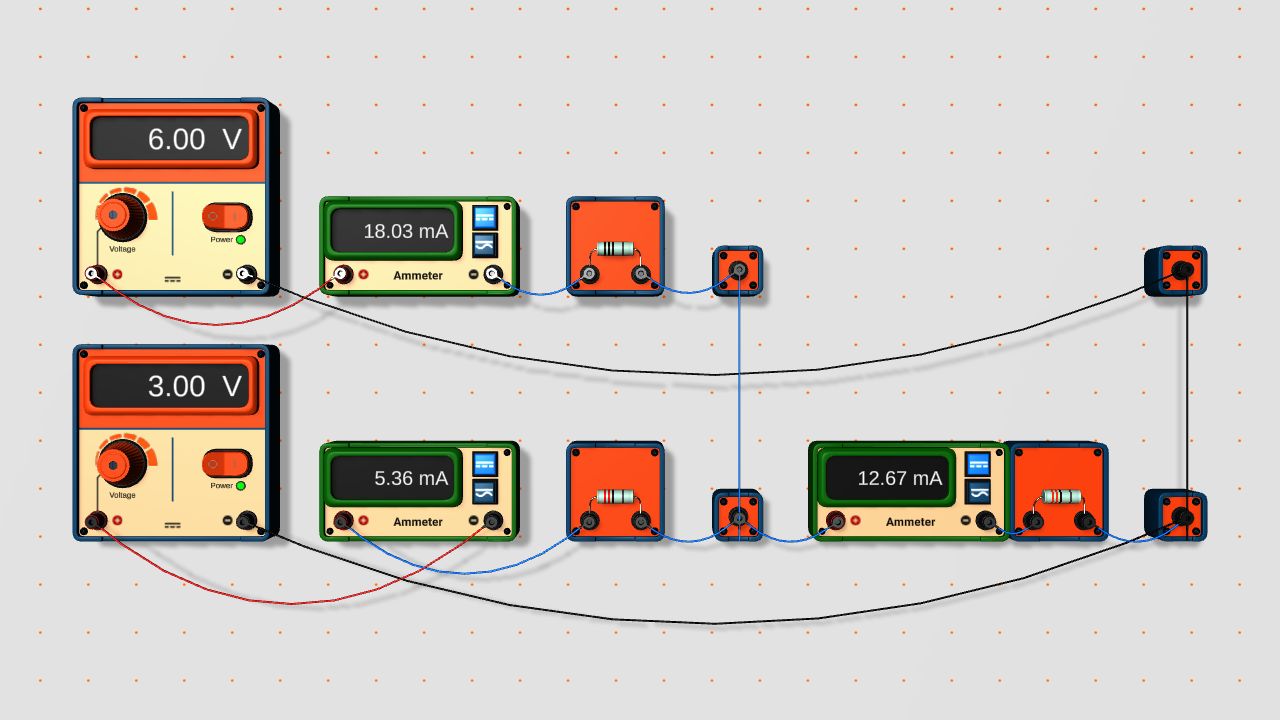
Verify Kirchhoff's first and second rules in a circuit with two sources.
-
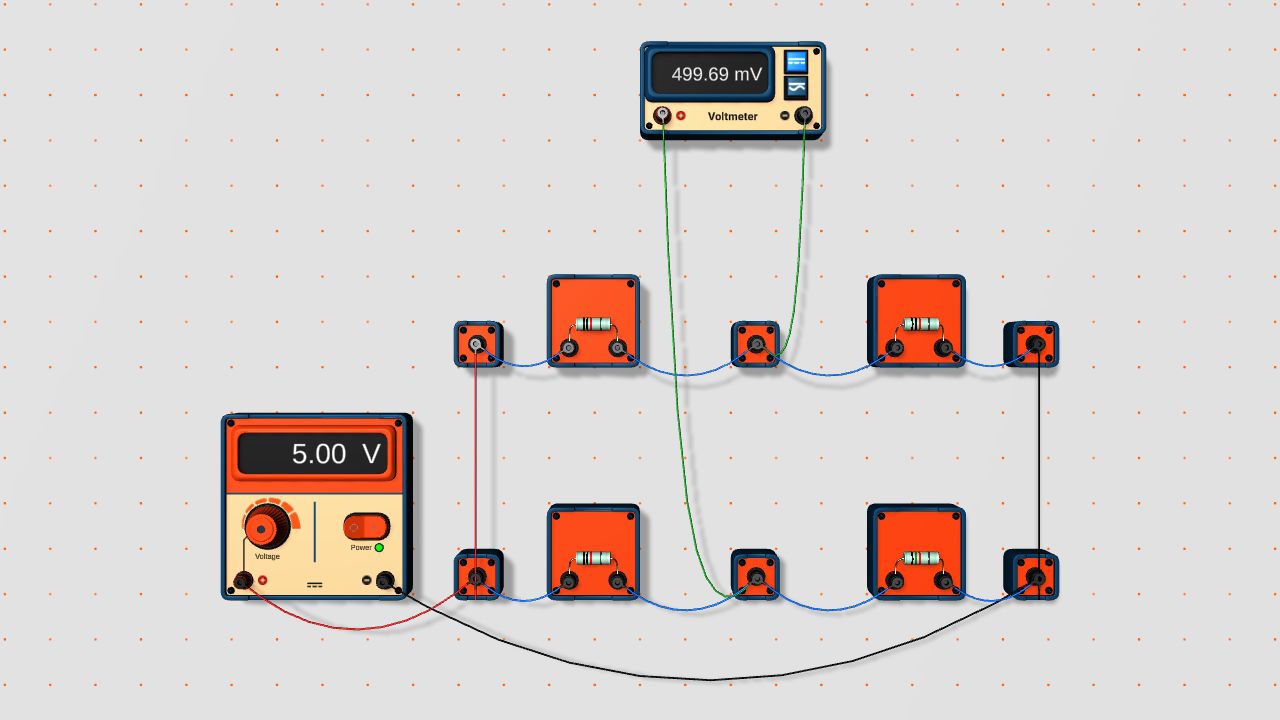
Balance the bridge and find an unknown resistance from the balance condition.
-
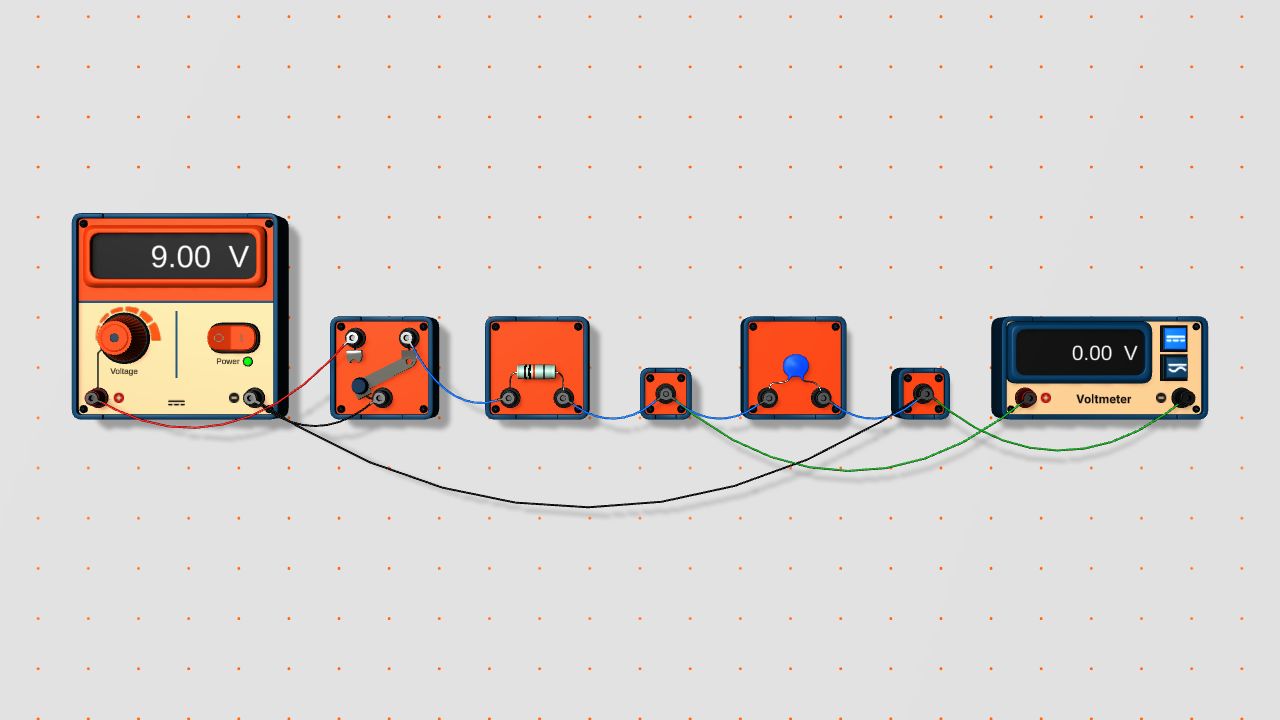
Charging and discharging a capacitor with a voltmeter
Record the charging and discharging curves of a capacitor, and determine the RC time constant and the capacitance of two capacitors connected in parallel.
-
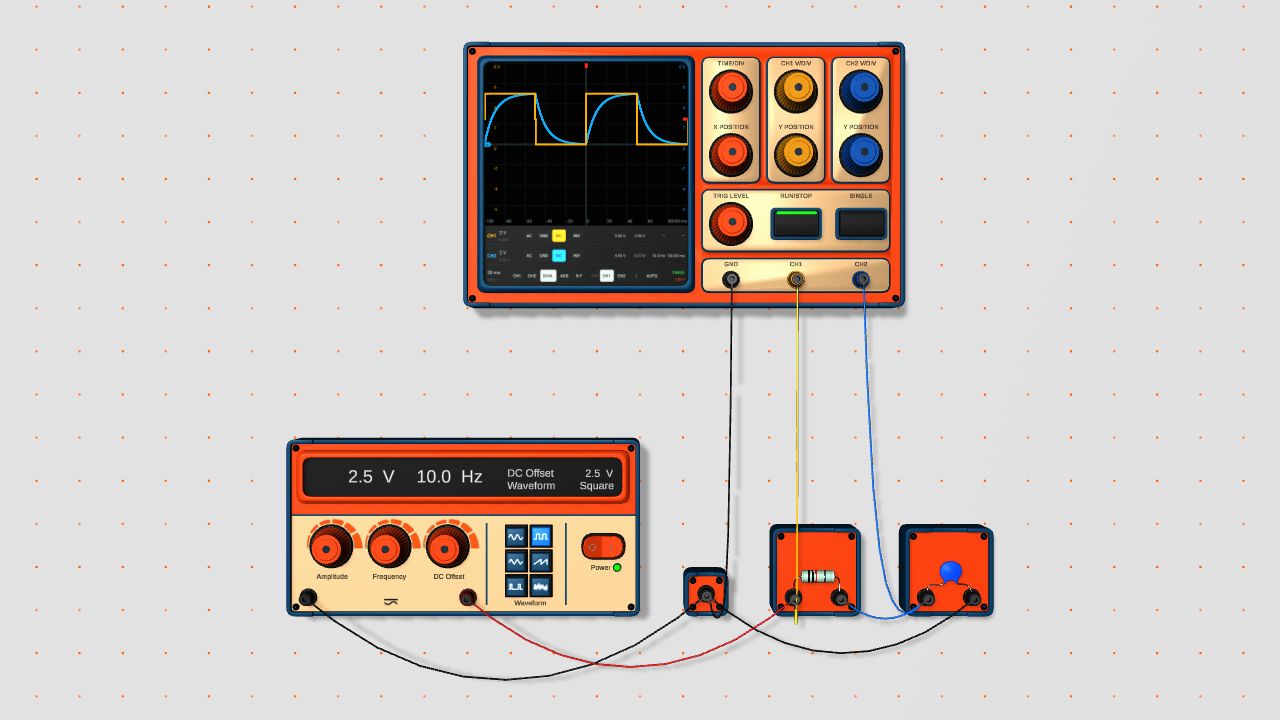
RC circuit on the oscilloscope
Observe the charging and discharging of a capacitor on the oscilloscope and measure the time constant.
-
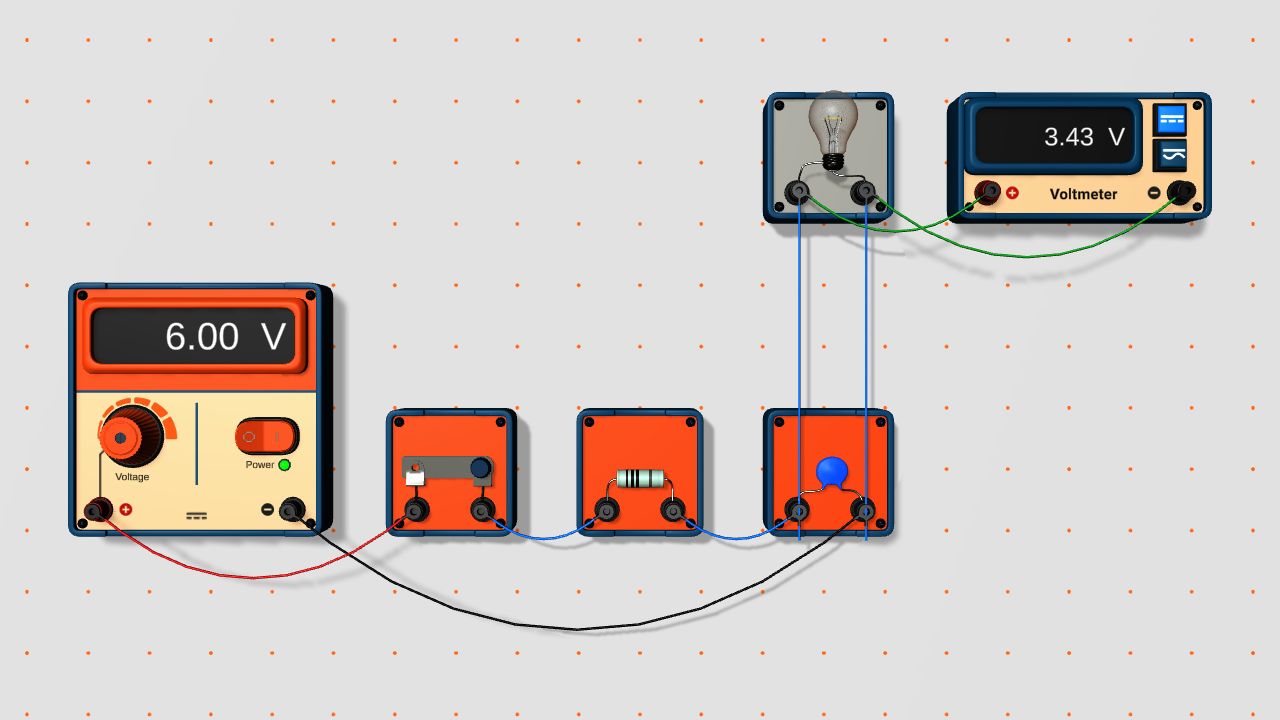
The capacitor as an energy store
Verify that a charged capacitor stores energy and can power a lamp.
-
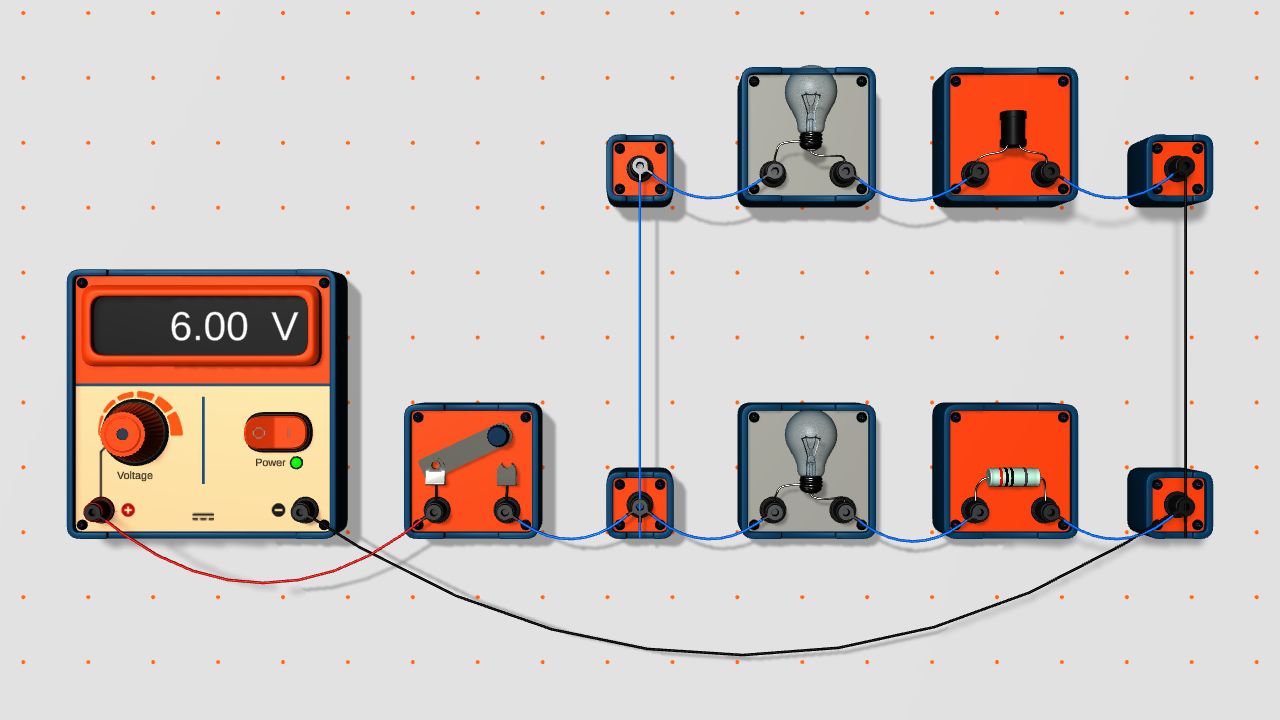
Current delay in an inductor (two lamps)
Observe how an inductor delays the rise of the current when the circuit is switched on.
-
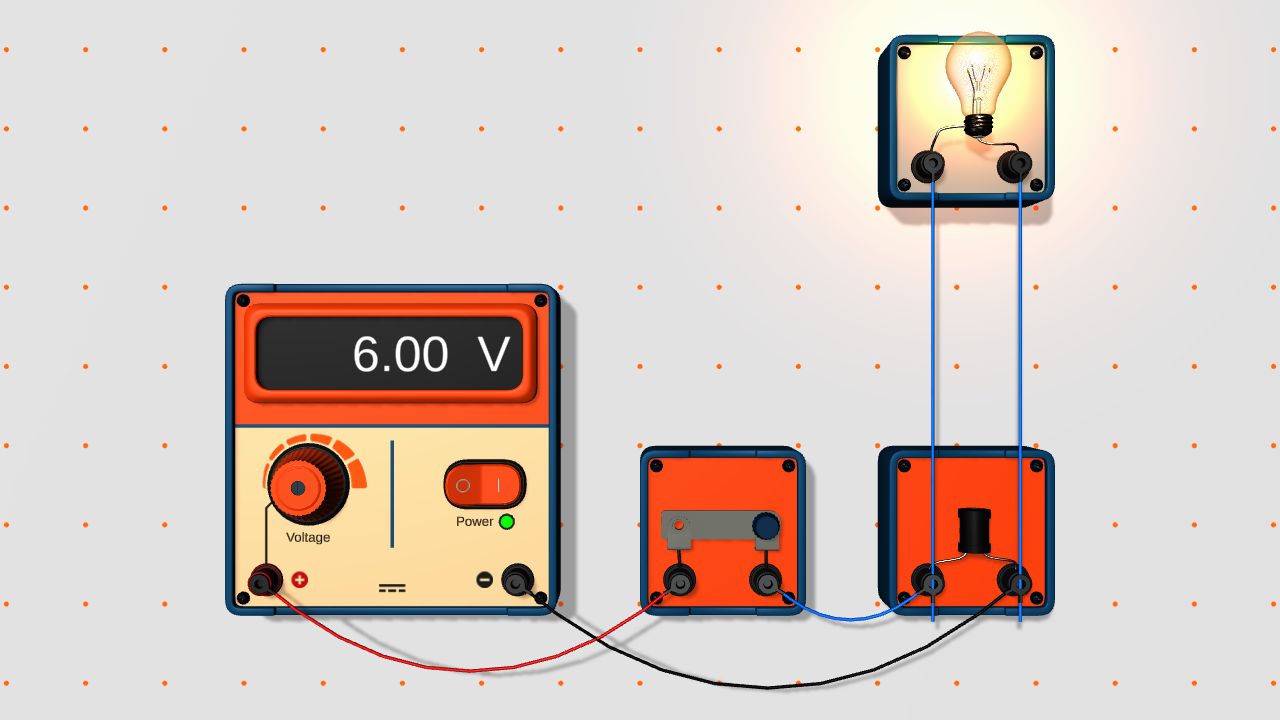
Self-induction on opening the circuit
Observe the self-induced EMF when a circuit containing an inductor is opened.
-
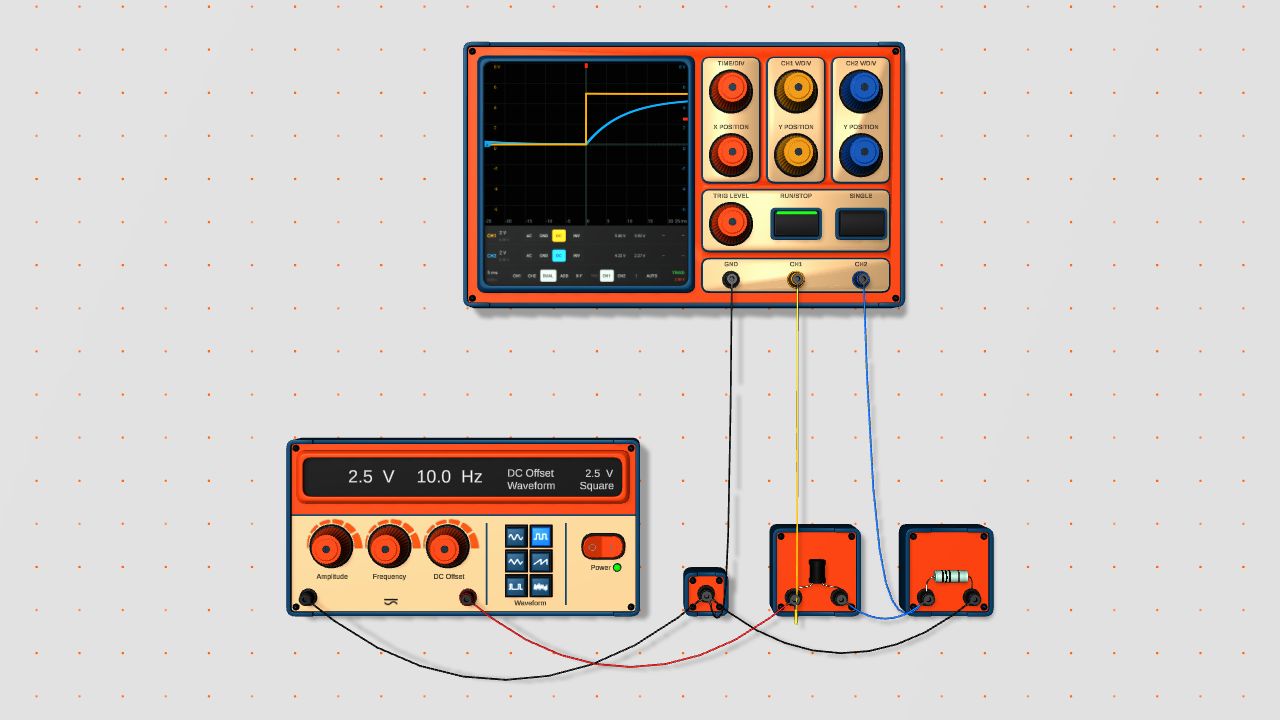
RL circuit on the oscilloscope
Observe the rise and decay of the current in an RL circuit and measure the time constant \(L / R\).
-
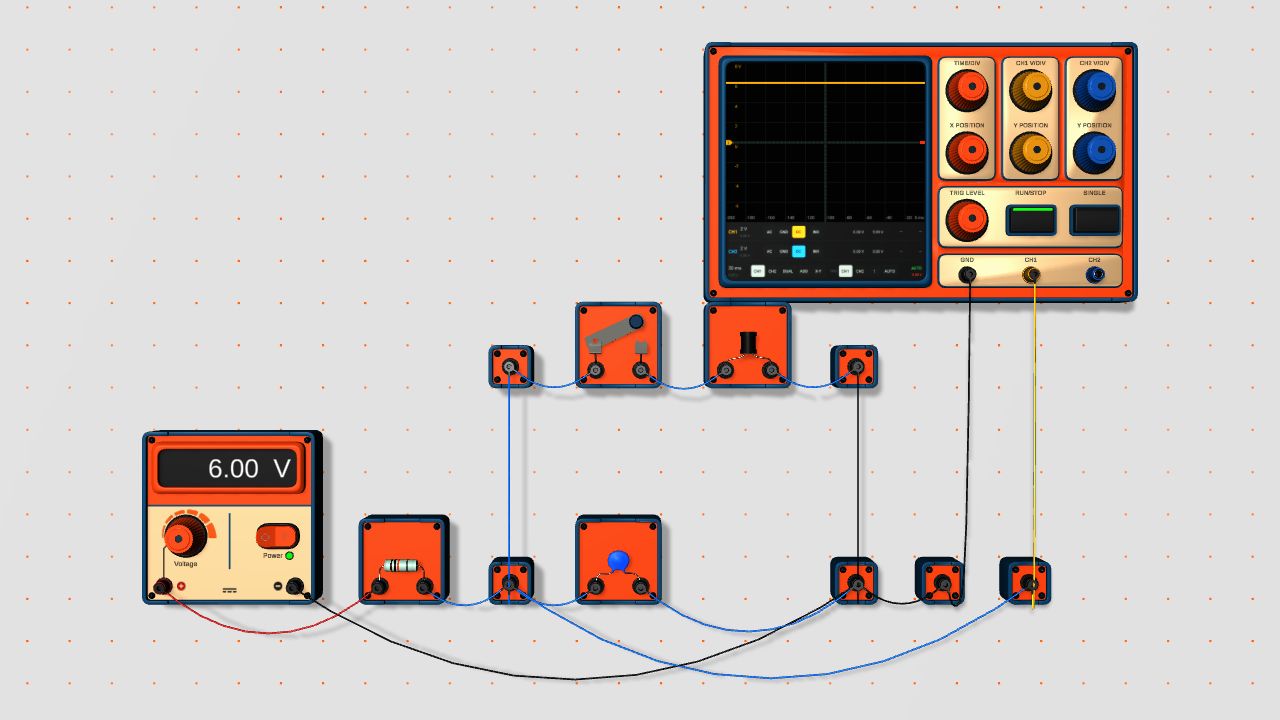
Damped oscillations in an LC circuit
Observe free damped oscillations in an LC circuit and measure their period.
-
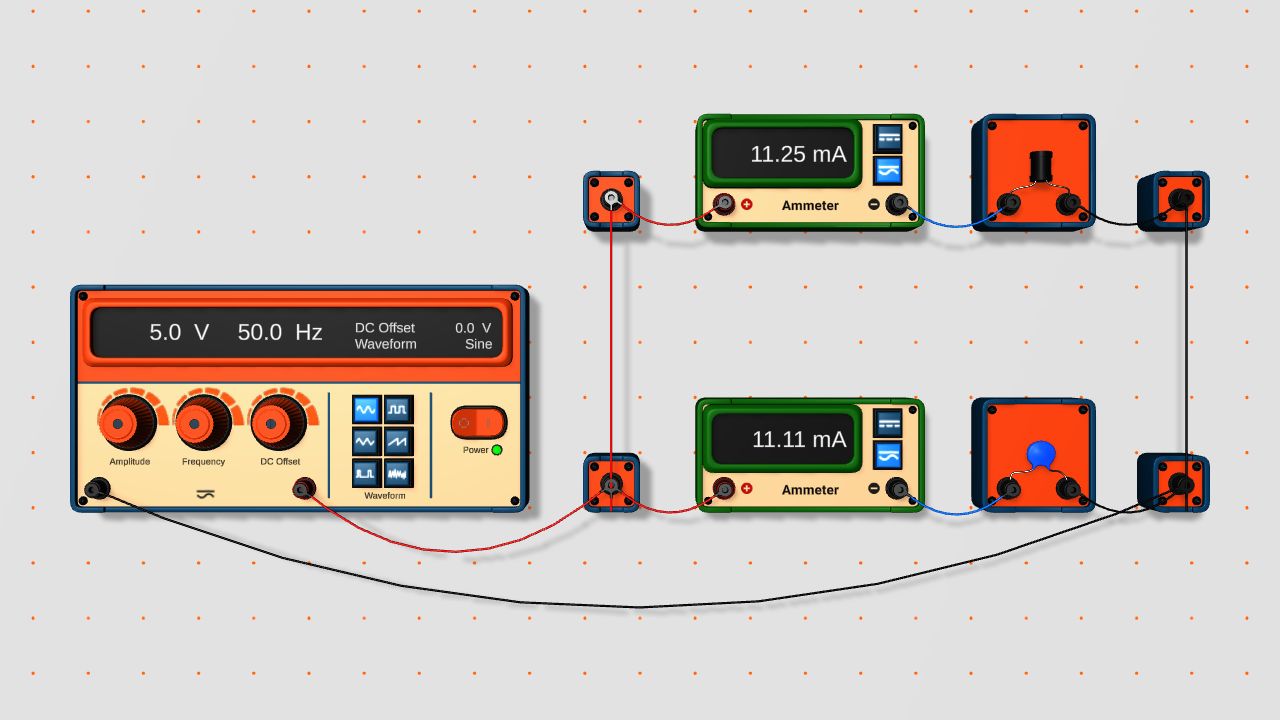
Reactance of a capacitor and an inductor in AC
Investigate how the reactance of a capacitor and an inductor depends on frequency.
-
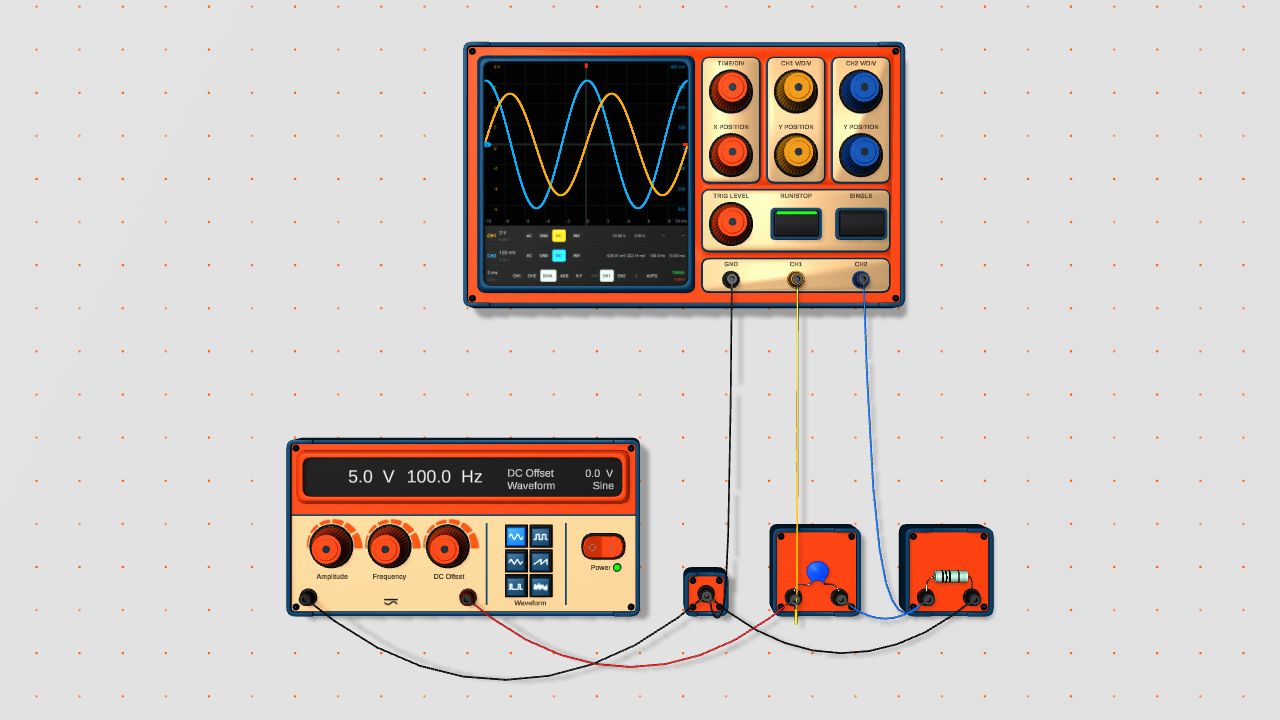
See the phase shift between current and voltage in a capacitor.
-
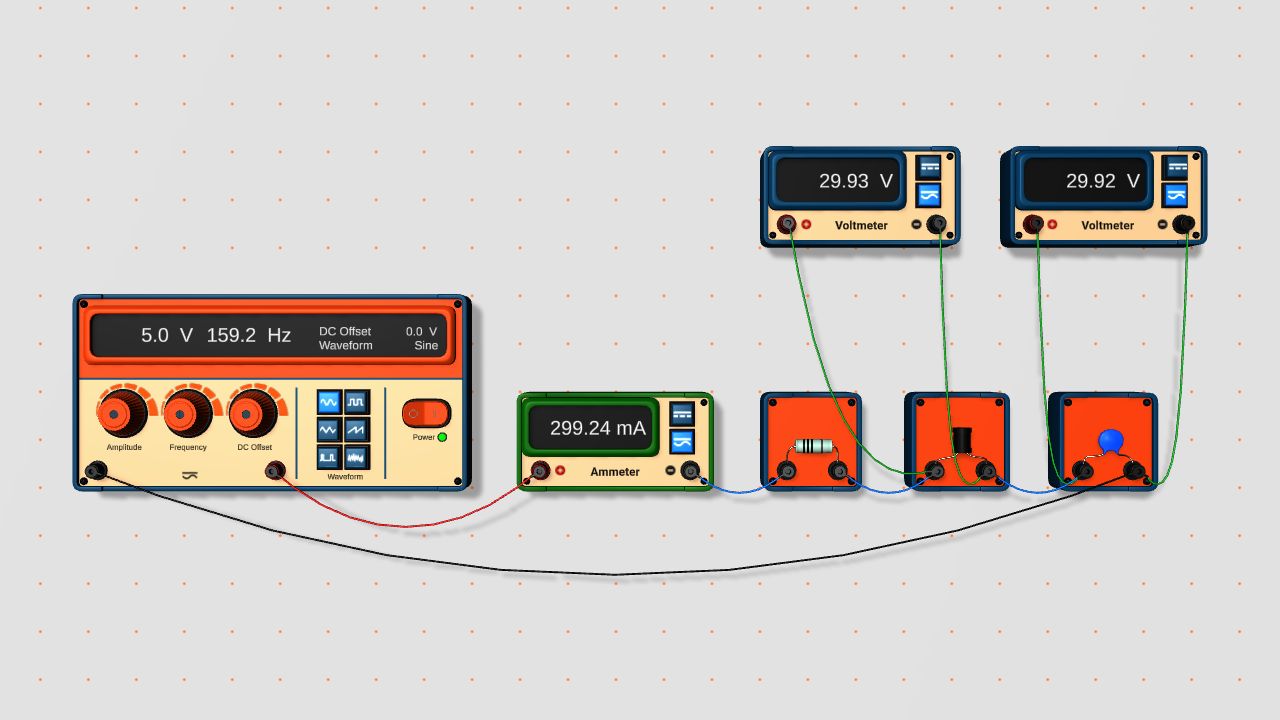
Resonance in a series RLC circuit
Measure the resonance curve of a series RLC circuit.
-
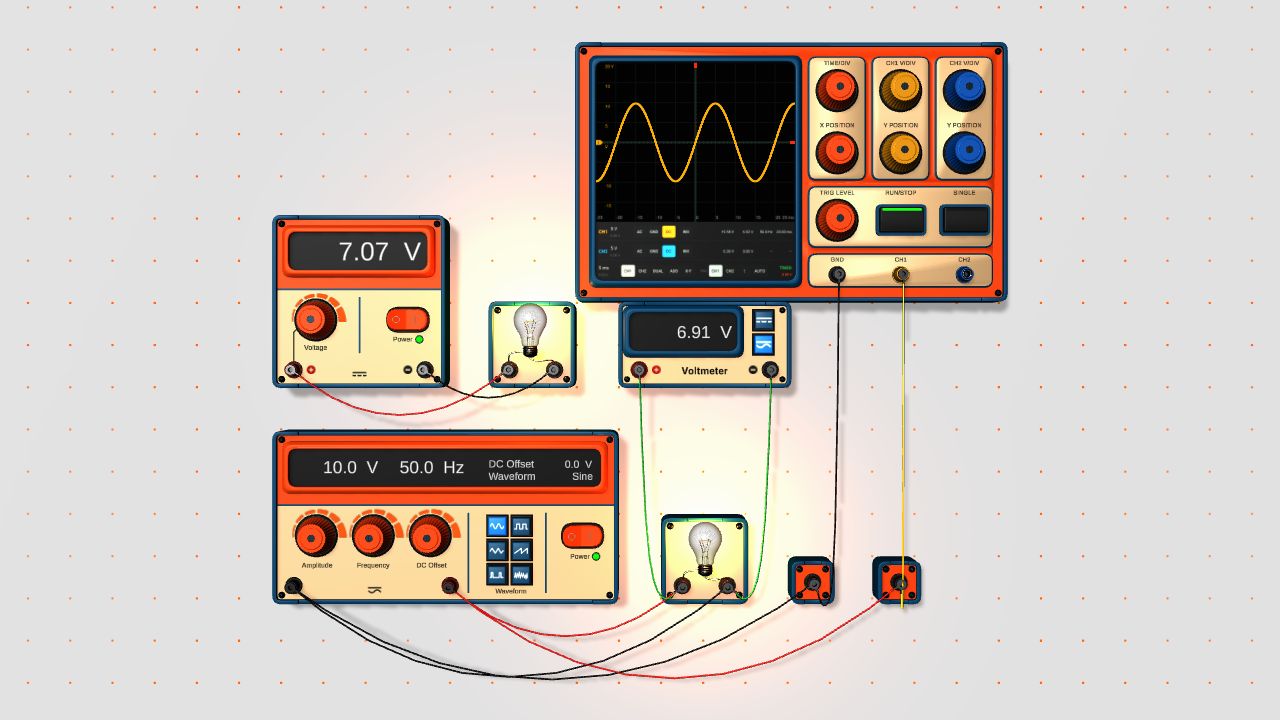
Compare the effect of alternating and direct current and understand the meaning of the RMS value.
-
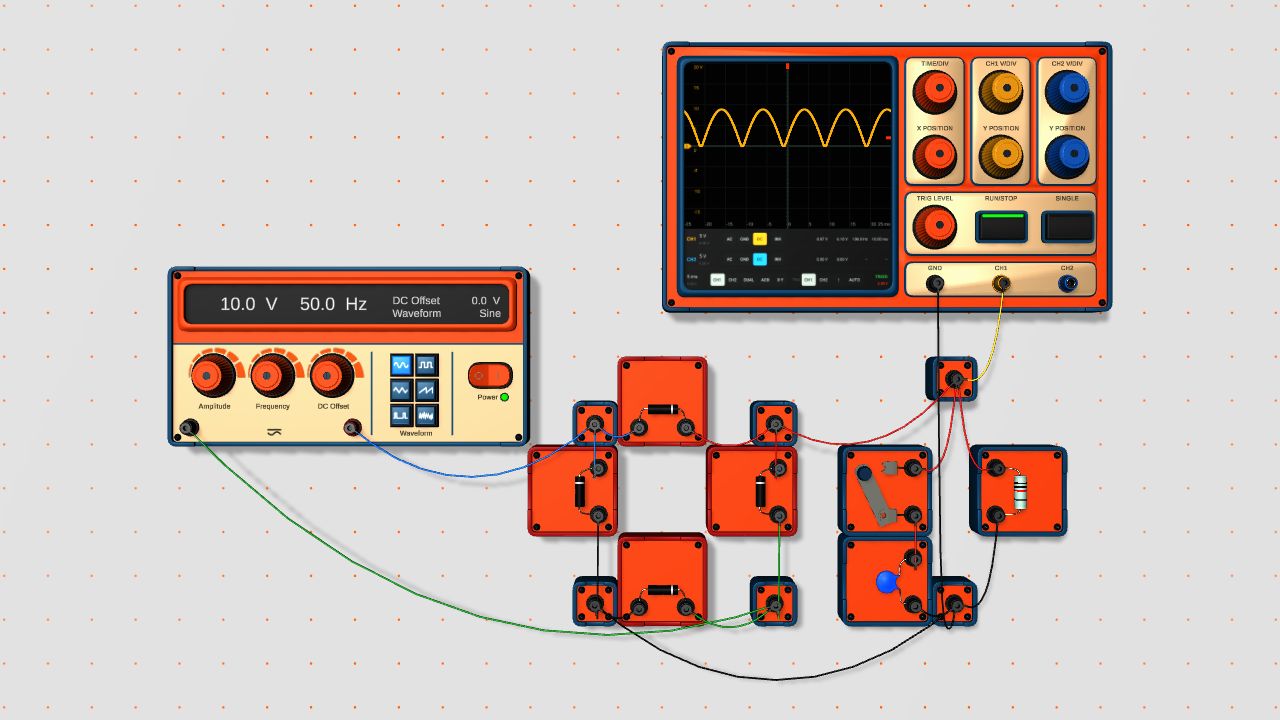
Study the full-wave bridge rectifier and the smoothing of the ripple by a capacitor.
-
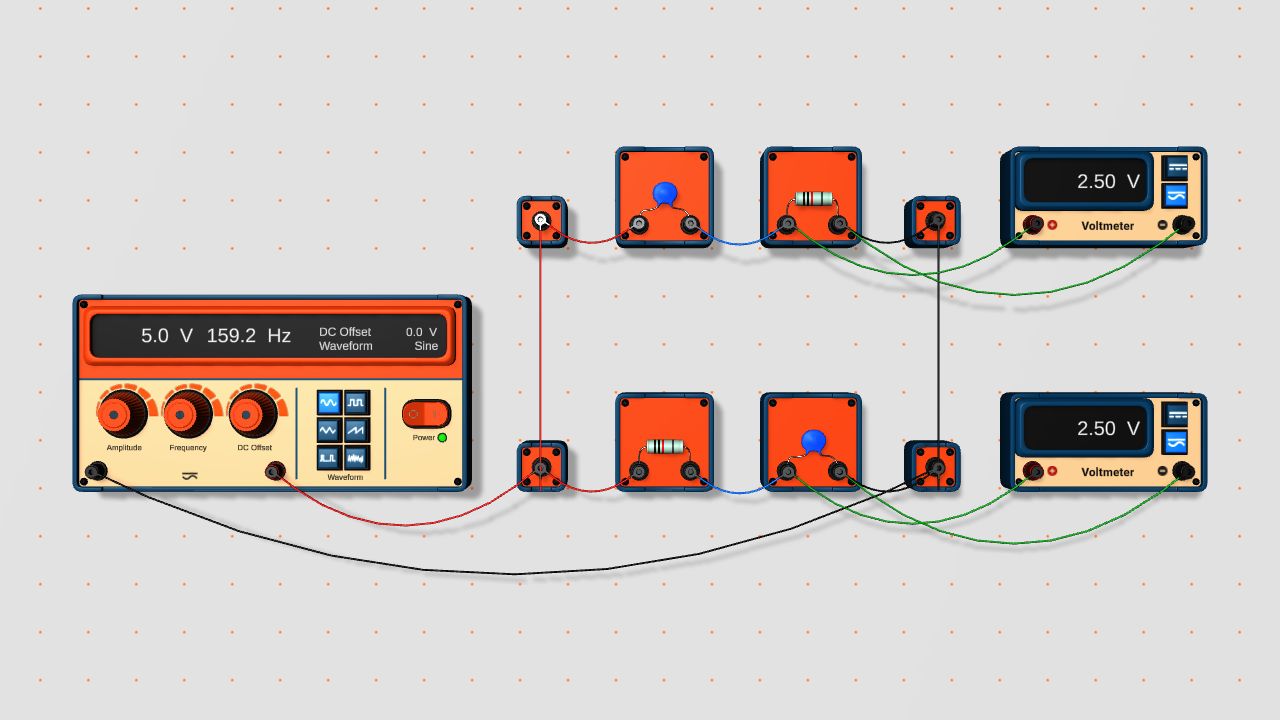
Measure the frequency responses of RC low-pass and high-pass filters.
-
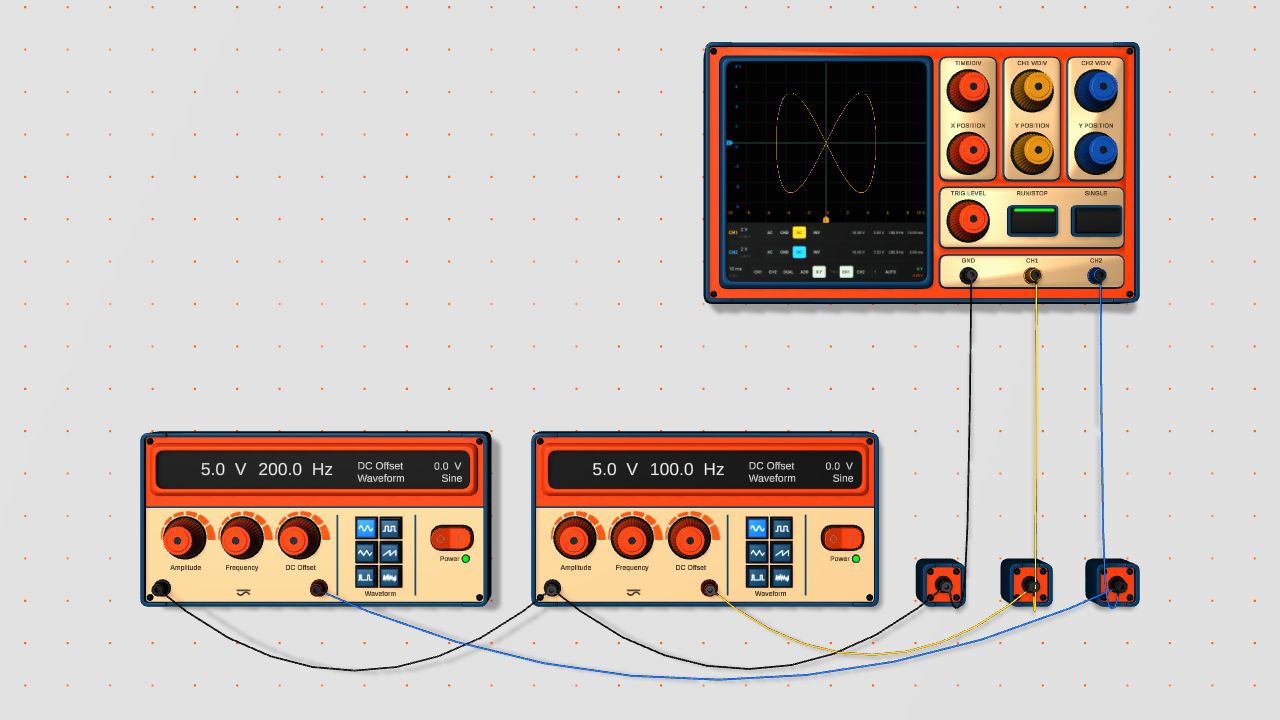
Obtain Lissajous figures and use them to determine the ratio of the frequencies of two signals.
-
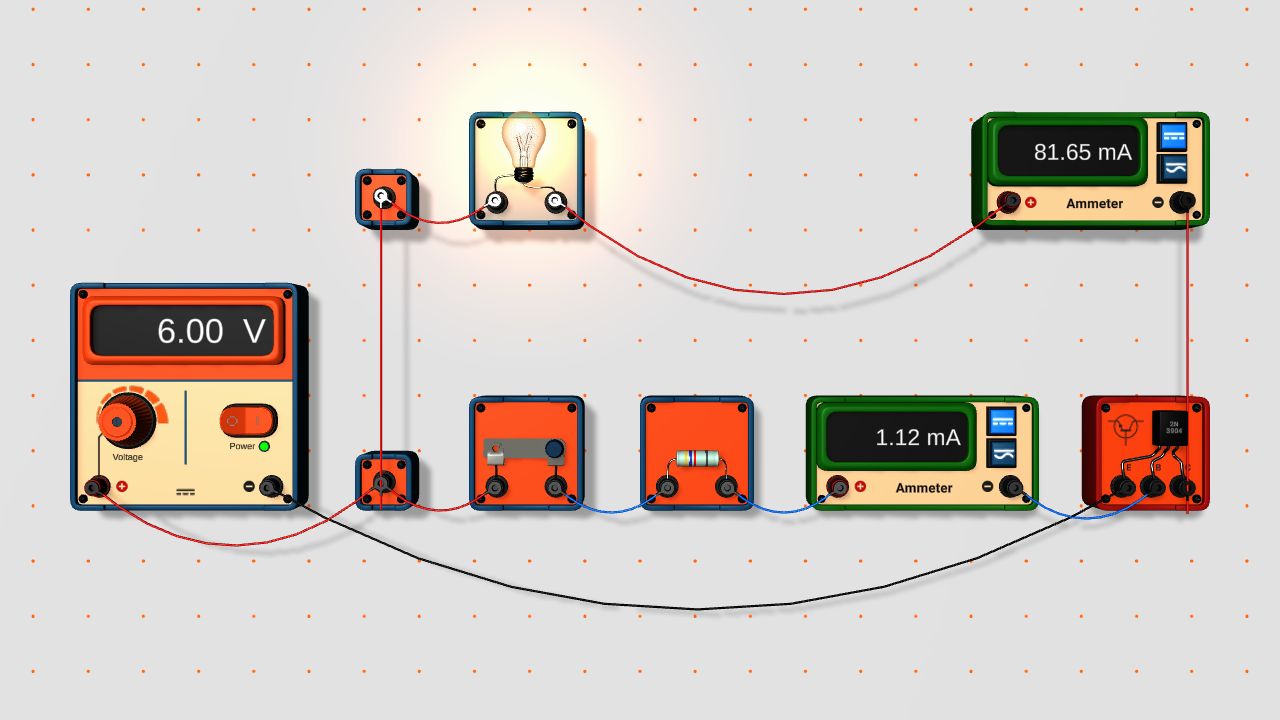
See how a small base current controls a large collector current, and measure the current gain of the transistor.
-
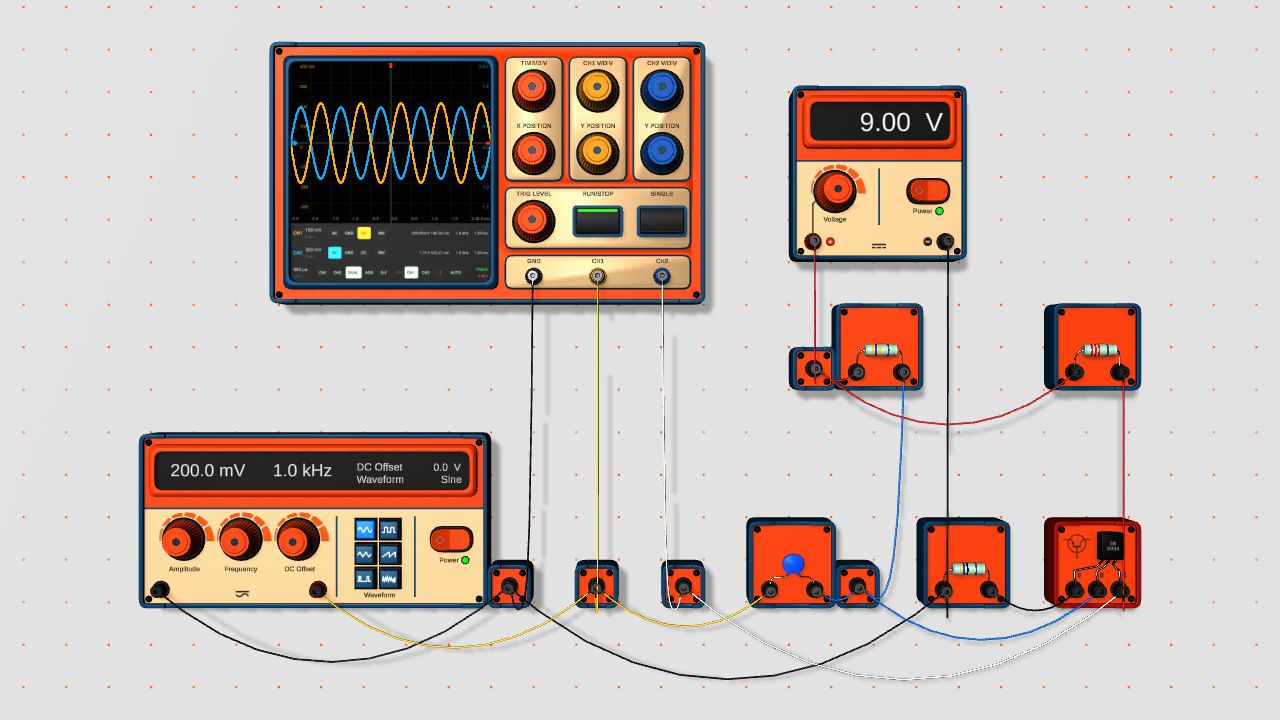
Build a transistor amplifier stage, find its operating point and its voltage gain.
-
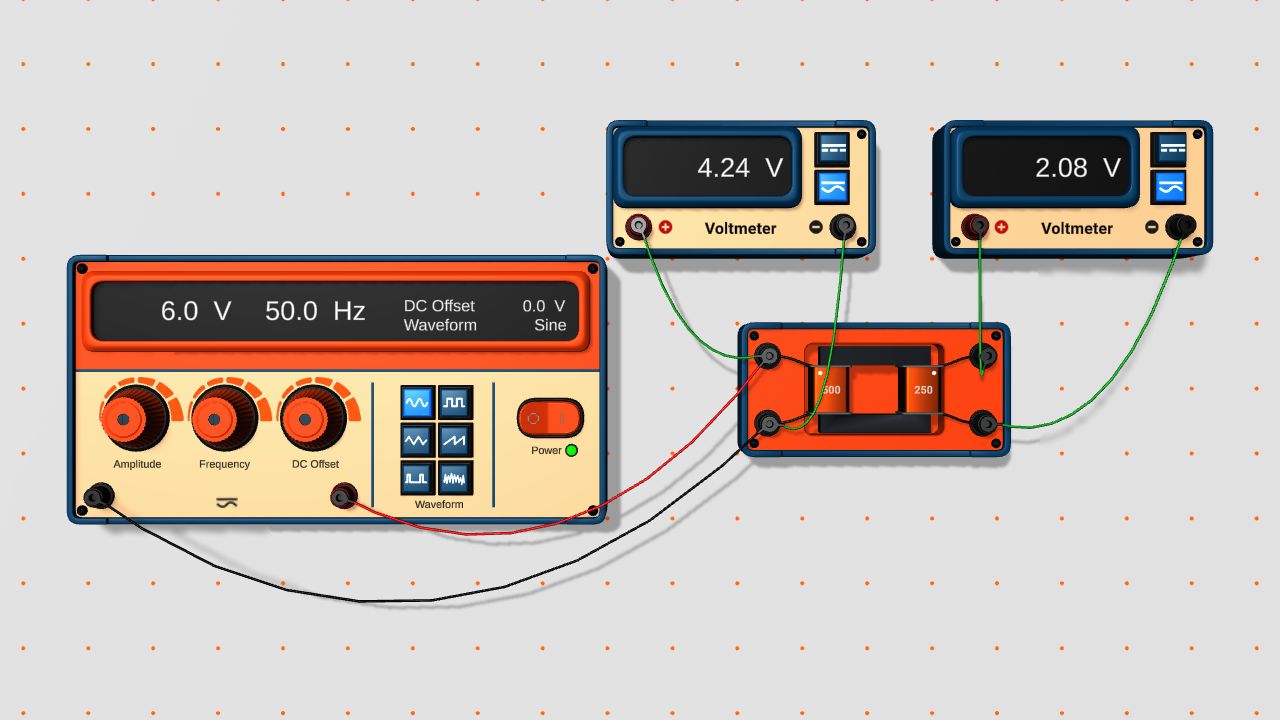
Find out how the voltage on the secondary winding of a transformer depends on the number of turns of the windings.
-
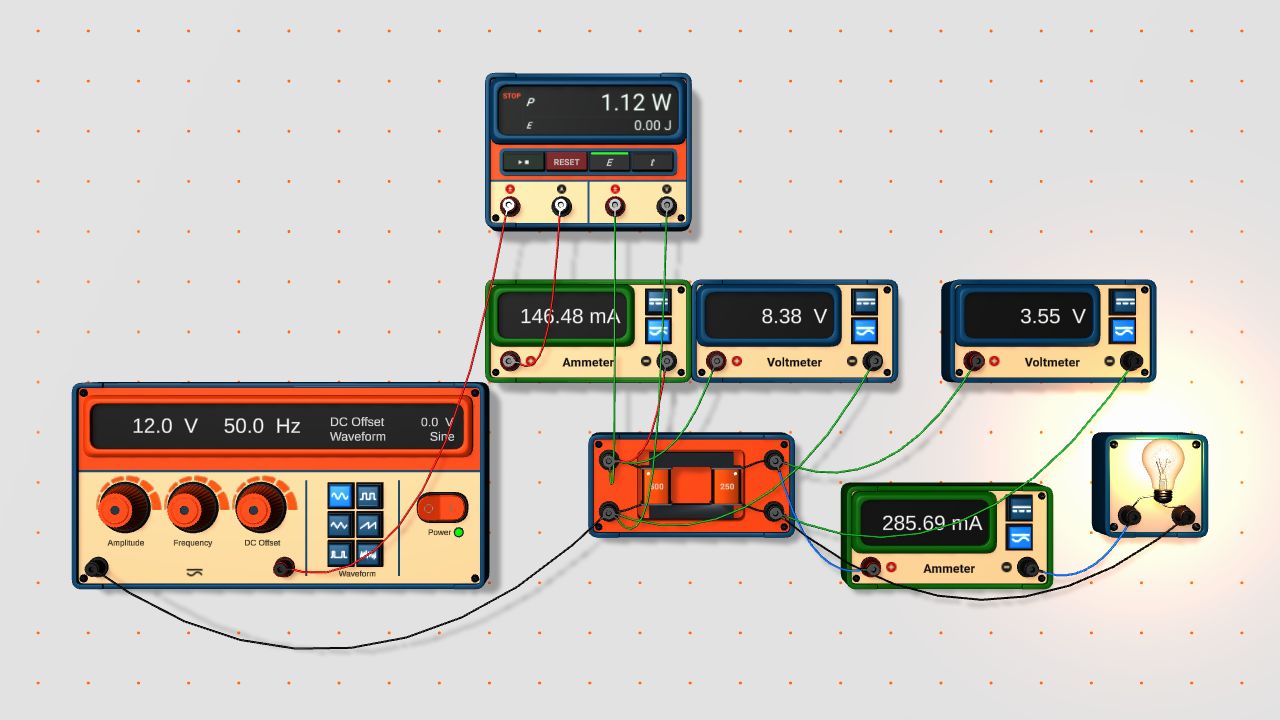
Compare the currents and powers in the primary and secondary circuits of a transformer and estimate its efficiency.
-
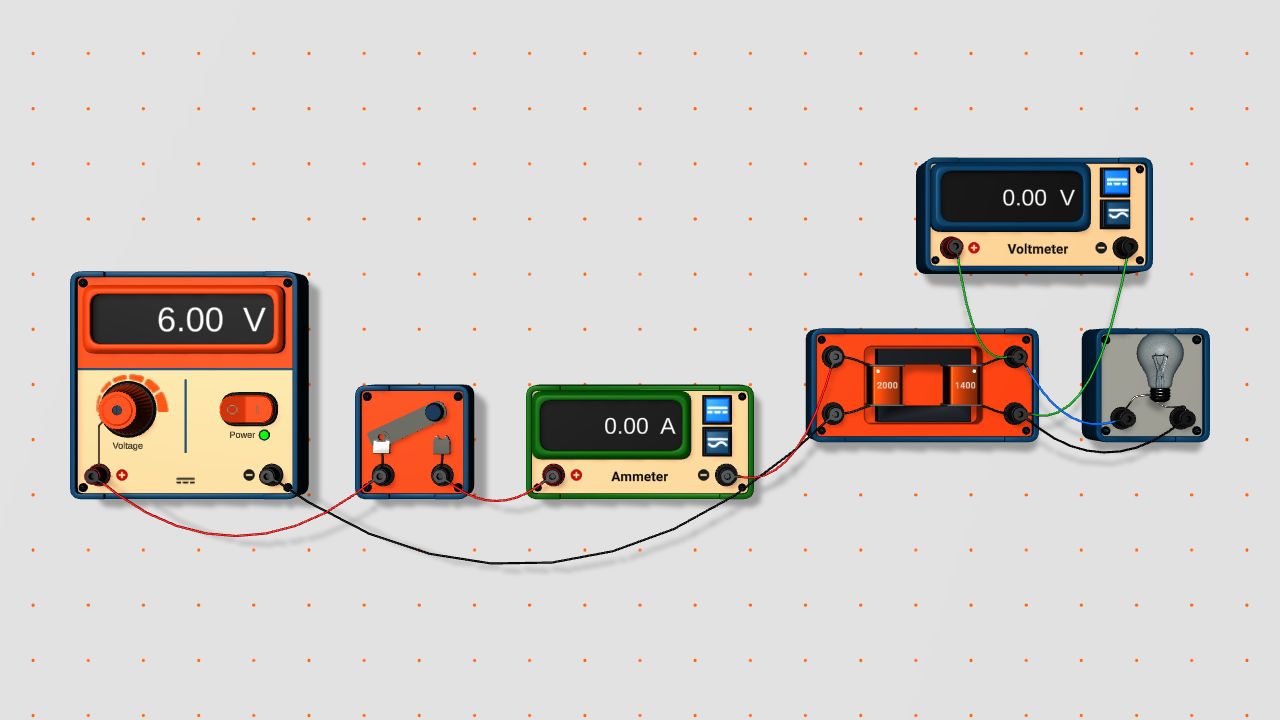
Transformer and direct current
Check whether a transformer works on direct current, and see that a voltage appears in the secondary winding only when the current in the primary changes.
-
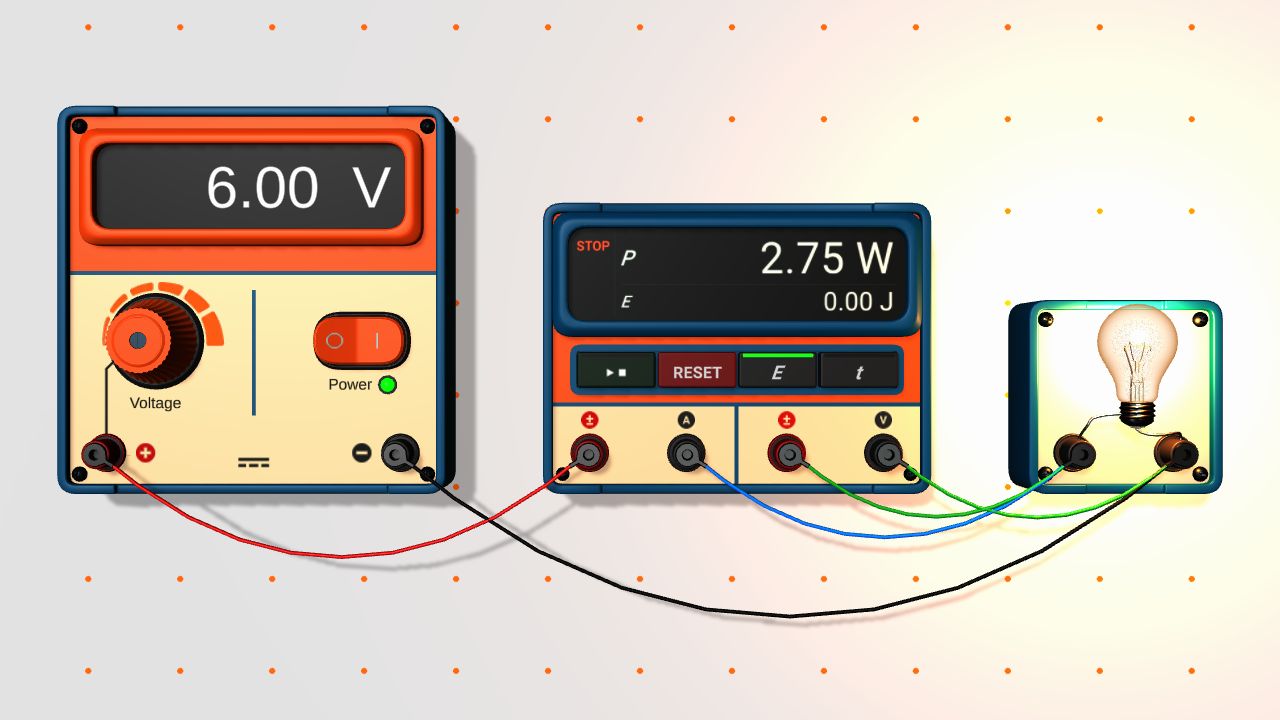
Measure the power the lamp consumes and the energy the current delivers over time; check that \(E = P \cdot t\).
-
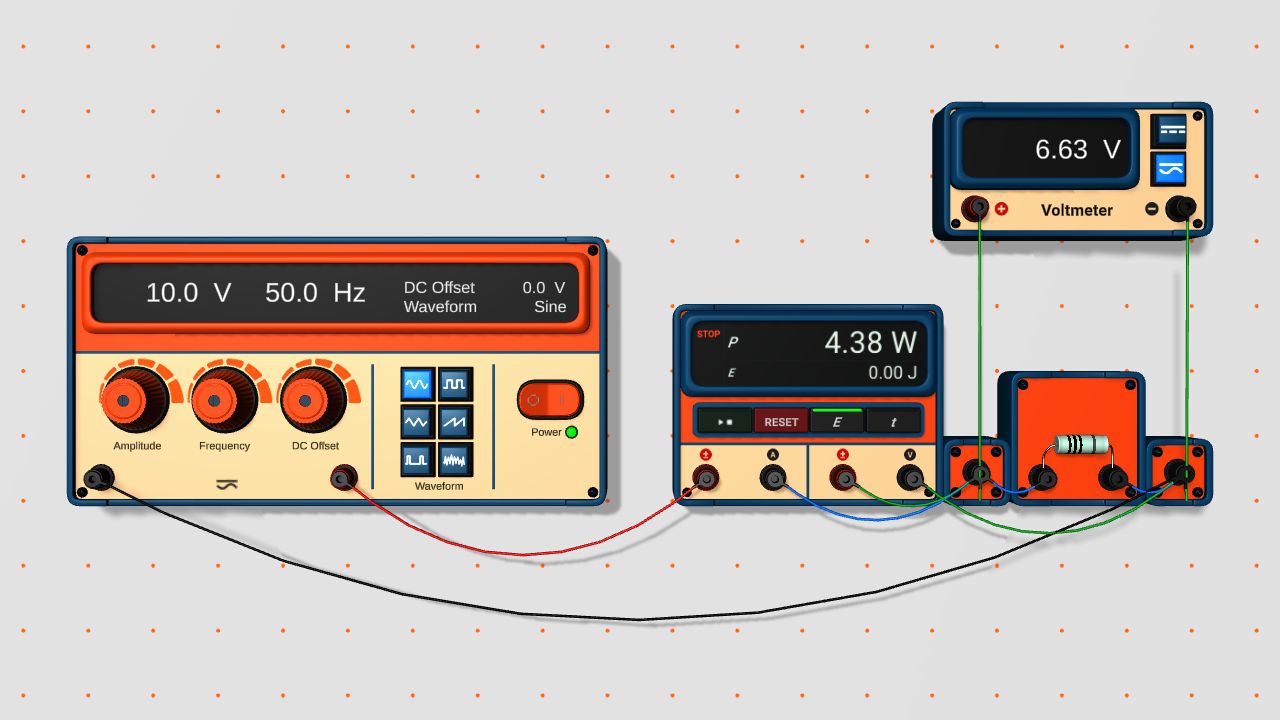
Measure the power of an alternating current in a resistor and relate it to the RMS value of the voltage.
-
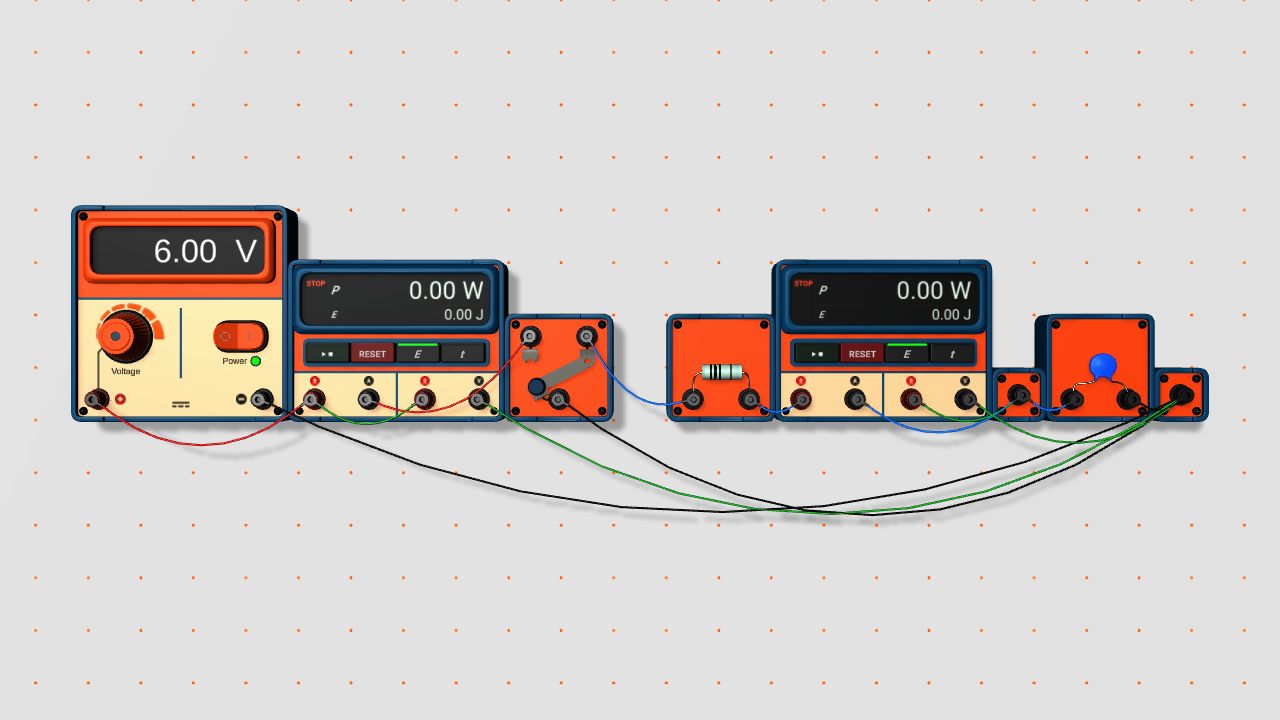
Energy when charging a capacitor
Measure how much energy the source delivers when a capacitor is charged and how much of it the capacitor stores.